
SHARE
Madam Speaker.
Honourable Premier.
Colleagues in the Executive Council.
Honourable Chief Whip.
Honourable Members of the House.
MMCs of Finance present here.
HODs of Gauteng Provincial Government departments.
CEO of the Financial and Fiscal Commission.
Representatives from National Treasury and Office of the Auditor General.
Representatives of the Development Bank of South Africa.
Representatives of our provincial banker Standard Bank and other financial institutions present today.
Chairpersons and CEOs of Gauteng Provincial Government agencies.
Members of the Gauteng Youth Advisory Panel.
Leaders of business, labour, academia and civil society.
Honourable guests.
Members of the media.
The people of Gauteng.
INTRODUCTION
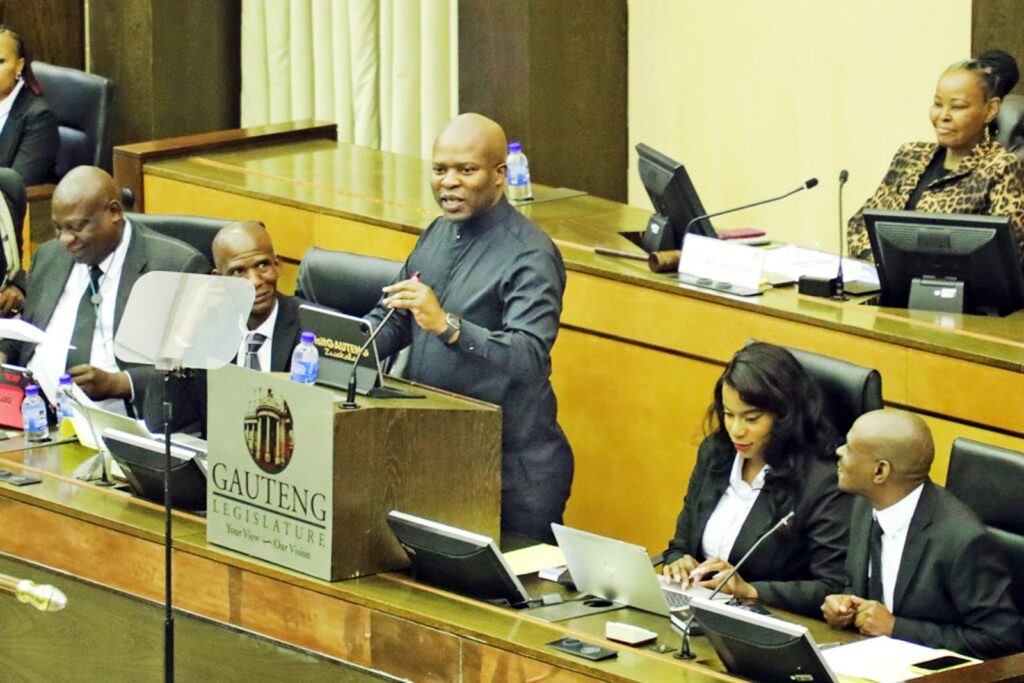
Madam Speaker, it is my honour and privilege to stand in this august house this morning to table the 2026/2027 Budget of the Gauteng Provincial Government. The tabling of this Budget takes place during an important month in the calendar of the republic – Human Rights Month.
During this month, we will be reflecting on the country’s constitutional democracy, promoting human rights, and commemorating the struggle against apartheid. This month serves to remind us as South Africans of the sacrifices that were made for democracy and to address the reality of structural inequalities that confronts us in this democratic dispensation. The theme of Human Rights Month 2026 centres on the celebration of three decades of the adoption of the Bill of Rights – the cornerstone of the nation’s democracy.
The theme speaks to “Making Human Dignity Real”, which for us as civil servants, means ensuring that the fundamental rights that are enshrined in the Bill of Rights exist not on paper, but as a practical and lived reality that is felt in our communities.
Making human dignity real demands, above all else, that we place value on the lives of all people who reside within the borders of South Africa.
Such value is expressed in the public services that we deliver, the opportunities that we create to the most salient challenges that we confront and the ways in which we utilise legislative instruments to ensure the transformation of our society.
It is for this reason that the theme for the 2026/2027 Budget of the Gauteng Provincial Government is “The audacity of hope: A collective commitment to building a resilient Gauteng.”
The audacity of hope is about the courageous and stubborn refusal to succumb to cynicism, despair or fear in the face of daunting challenges. Collective commitment is about bringing all stakeholders together in the quest to build and strengthen an economy that works for the people of Gauteng.
At its core, hope is neither denial nor passive optimism. It is a call to action – an unwavering belief that despite systemic challenges such as structural inequalities, unemployment and poverty, a better Gauteng is possible through collective action.
Today, as the Gauteng Provincial Government, we table a budget that demonstrates our audacity to hope and our stubborn refusal to accept that internal and external factors are insurmountable.
We recognise the geo-political forces that are shaping national and provincial economies across the world. We understand their implications for emerging economies.
We nonetheless reiterate our commitment to addressing the thirteen (13) priority challenges that we identified at the beginning of the 7thadministration. These priorities are: (1) unemployment, (2) gender-based violence and femicide (3) failing infrastructure and CBD decay (4) water supply shortages (5) poor services at hospitals and clinics (6) infrastructure vandalism and cable theft (7) crime and lawlessness (8) the mushrooming of informal settlements (9) drug/substance abuse (10) energy insecurity in the form of load-shedding and load-reduction (11) inadequate schools (12) potholes and (13) non-functioning traffic lights
Thus, we table a budget that backs the three priorities of this administration as outlined in the Gauteng Medium-Term Development Plan (MTDP) 2024-2029. These priorities are:
- Driving inclusive growth and jobs as a means of rebuilding confidence, crowd-in investment and unlocking opportunities for work.
- Improving living conditions and well-being through reliable services, safety and functioning social services.
- Building a capable and ethical development state through ensuring clean administration, discipline and consequence management.
We also table a budget that demonstrates appreciation for the fiscal reality that we are in – a budget that determines the need for pragmatism by ensuring that financial commitments are sustainable rather than merely aspirational.
The immediate task of the Gauteng Provincial Treasury is to ensure that the priorities that have been outlined are not left as intentions, but are converted into funded programmes, clear responsibilities, and measurable results.
It is for this reason that while this budget is a technical and systematic plan that outlines expected revenues and expenses and serves as a tool for financial control and resource allocation, it is also a foundation on which strategic decision-making within the Gauteng Province will be anchored.
Delivering the National Budget to Parliament last month, Minister Enoch Godongwana described the current moment as a turning point in public finances, built on a disciplined approach that stabilises debt, invests in infrastructure and efficient spending. He was unambiguous and forthright about protecting macro-economic stability, implementing structural reforms, investing in growth-enhancing infrastructure, and building state capacity.
The Gauteng Provincial Government is in full alignment with this, and the budget that we are tabling today funds what is prioritised, affordable and deliverable.
The reality of the situation is that while Gauteng remains the economic nerve-centre of the national economy, we do not have limitless resources.
We too are constrained by the realities of the global and national economic environment. For this reason, we recognise that we cannot resource everything. We must be intentional in funding what works.
We understand the reality that hope must be funded and commitment measured. Furthermore, we must protect front-line services while tightening discipline.
We have large obligations that need to be addressed, such as the e-Toll debt. We also have the responsibility to repair and rebuild local government because it is the coalface of service delivery.
It is the primary and direct point of contact between residents and the state. Our promise to the people of Gauteng is and has consistently been service delivery, and our guiding philosophy remains discipline.
This budget reflects that philosophy.
ECONOMIC OUTLOOK
Global economic environment
Honourable Members, the global economic environment is characterised by elevated volatility, persistent geo-political tensions as it evidenced in the devastating and expanding war in the Middle East, and the residual effects of earlier shocks including those related to the United States tariff measures.
The International Monetary Fund (IMF) projects global Gross Domestic Product (GDP) growth to remain stable at 3.3 percent in 2026, unchanged from 2025. Growth is expected to moderate slightly to 3.2 percent in 2027.
The outlook is supported by easing financial conditions, continued investment in Artificial Intelligence-related sectors and broadly supportive macroeconomic policies. These have mitigated the impact of elevated trade frictions.
Emerging markets and developing economies (EMDEs) are expected to remain comparatively resilient. Their growth is forecast to have increased marginally to 4.4 percent in 2025, before stabilising at around 4 percent over the medium term.
Sub-Saharan Africa is projected to outperform the global average, with output growth rising from 4.4 percent in 2025 and strengthening to 4.6 percent over the medium term, despite persistent structural constraints.
South Africa’s economic outlook
On the domestic front, the dynamics of our economic performance is influenced by a combination of global economic shocks, persistent structural constraints and evolving policy responses.
However, we are encouraged by the cautiously optimistic economic outlook, underpinned by improving conditions, notably the stabilisation of electricity supply, reflected in fewer and less severe power outages, and gradual improvements in logistics and transport operations, particularly at key ports and freight rail corridors.
In addition, easing inflationary pressures, lower interest rates and a positive shift on our sovereign credit rating. The Financial Action Task Force has also removed the country from its grey list – a clear reflection of the strides that we are making to strengthen, among other things, our anti-money laundering measures and financial systems.
Despite these improvements, our economy remains constrained by weak growth, persistent structural bottlenecks, and limited job creation.
The National Budget projected that the economy will grow by 1.6 percent this year, increasing to 1.8 percent in 2027 before reaching 2 percent in 2028.
It is through sustained implementation of ongoing structural reforms including improvement in infrastructure service delivery and policy certainty that we can place the economy on a higher and more inclusive growth trajectory over the medium term.
Gauteng’s economic outlook
Turning to our province, Gauteng remains the engine of the country’s economy, driven by, among other sectors, finance, trade, and transport. The province’s annual Gross Domestic Product by Region (GDP-R) amounts to more than R2.4 trillion.
This means that the province accounts for about 33 percent of the country’s GDP and more than 10 percent of the total GDP of the entire Sub-Saharan Africa region.
However, data from our 2026 Socio-Economic Review and Outlook, one of the key publications that we are releasing today, shows that metropolitan municipalities and districts municipalities continue to face substantial economic and structural challenges. These have constrained investment, growth, and employment creation in local economies.
That said, economic projections for the medium-term point to steady recovery with provincial economic growth expected to reach 2.1 percent in 2026 – significantly above the national average.
In addition to this, Gauteng is positioned to continue increasing the number of jobs created in the province. In 2025, we created over 250 000 jobs in the province, with the second quarter of 2025 seeing a creation of 95 000 jobs – the highest number of jobs created by a single province in South Africa. There are currently just over 6 million people employed in Gauteng. Trade and construction were among the leading sectors for job creation, demonstrating that despite the difficult climate we find ourselves in, businesses continue to have confidence in the capacity of the province to turn things around.
As the Gauteng Provincial Government, we fully understand that we must decisively intervene and work with partners in the public, private and civil society sectors to support our economy in order to regain momentum by capitalising on sectoral strength and improving the investment climate in the province.
It is for this reason that we have, among other interventions, adopted the Gauteng City Region Economic Growth and Development Plan, which we will be launching on the 19th of March this year.
GAUTENG INVESTMENT CONFERENCE
Madam Speaker, as stated, Gauteng is the economic heartland of the country. The assertion that Gauteng must never be allowed to stop beating, which was reiterated in the State of the Province Address, is echoed by all of us.
Our approach to growth is rooted in the quest for
re-industrialisation and the deliberate inclusion of township and local enterprises in the mainstream economy.
The 2026 MTEF budget supports growth in the following ways:
- Moving from plans to projects – The Premier announced the resumption of action labs across high-growth sectors, aimed at converting sector plans into bankable projects and driving job creation. This budget will support that move from strategy to implementable pipelines; and
- Backing investment attraction with execution capacity – The Premier reported significant investment mobilisation and job creation commitments, including progress from commitment to implementation. In this budget, we focus on what makes investment real. These are infrastructure readiness, predictable regulation, and competent delivery agencies.
To give practical expression to these commitments, we hosted the inaugural Gauteng Investment Conference (GIC) in April 2025, and preparations are underway for the second instalment that is scheduled for next month.
When we hosted the inaugural GIC, we did so with a clear intention to reposition Gauteng as a structured, execution-driven investment destination. The results were significant. The conference attracted over 1800 participants and secured R312.5 billion in investment pledges.
But conferences are not judged by attendance numbers or headlines. They are judged by implementation. It is therefore important that we account not only for what was pledged, but for what has been delivered.
As of February this year, 28 percent of the investment pledges secured in 2025 have already been converted into projects and are being implemented. Eighteen out of sixty projects are now in
a roll-out stage. These projects are to the value of just over R80 billion which will unlock this into the real economy.
These are not theoretical commitments. They are projects under construction, expansions underway, energy developments advancing, and jobs being created. This conversion rate is central to our credibility.
It signals that Gauteng does not treat investment mobilisation as an event-driven exercise, but as a continuous lifecycle – from origination and structuring to facilitation and delivery.
The GIC is not an add-on initiative, it is a force multiplier. It is the platform that integrates project preparation, investor engagement, intergovernmental coordination, and capital mobilisation across our strategic pillars.
By bringing visibility, structure, and accountability to the provincial investment pipeline, the GIC accelerates delivery and converts intent into implementation.
In doing so, it does not sit adjacent to the Gauteng Economic Plan, it operationalises it. It translates strategy into bankable projects, aligns provincial ambition with investor expectations, and ensures that economic policy is matched by execution discipline.
This approach strongly reinforces the objectives and ambitions of the Gauteng Economic Plan: inclusive growth, industrial expansion, infrastructure acceleration, job creation, and long-term competitiveness.
For the upcoming GIC, our objective is to secure new investment commitments. We remain determined to secure R800 billion in investments by the end of the 7th administration. This target is not aspirational. It is pipeline-backed and supported by structured engagement with domestic investors, foreign direct investors and sector leaders. It builds on the momentum of 2025 – but it moves us from mobilisation to institutionalisation. We are institutionalising marketing, origination, facilitation and delivery.
We are aligning with the African Continental Free Trade Agreement (AfCFTA) and Agenda 2063 to deepen Pan-African value chains. We are building on engagements in Davos, Italy and the Mining Indaba to convert diplomatic relationships into structured pipelines.
FISCAL FRAMEWORK AND STRATEGY
Honourable Members, the fiscal trajectory of the provincial government is aligned with the national fiscal framework. We are focused on effective debt management, robust revenue enhancement strategies, and spending restraint.
Taking the constrained fiscal environment into consideration, the provincial government is also actively seeking alternative funding sources to meet the increasing public service demands of the people of Gauteng at the time when our economic performance is weak.
Therefore, in line with this approach, the enduring principles that will guide the 2026 MTEF Budget include:
- Additions to the overall fiscal envelope considered for priority interventions if fiscal space has been created through the Targeted and Responsible Savings (TARS) process.
- Any budget pressures or new funding requirements must first be addressed through existing baselines.
- Programmes that have consistently underperformed or failed to achieve expected outcomes should be considered for reprioritisation or reallocation.
- Departments should also reprioritise budgets from non-recurrent programmes or obsolete programmes, additional allocations to a programme funded through reductions in another programme or through reprioritisation, either within the department, or from other departments’ budgets.
- Salary adjustments across public institutions must be aligned with the public service wage bill management strategy and budgets for compensation of employees must remain within the limits set in the 2025 Budget. This implies that departments will need to manage the overall size of the establishment to offset the unit cost of their workforce.
We are laser focused on protecting the public purse by stabilising our finances through maintaining fiscal discipline, credibility and ensuring impactful service delivery.
REVENUE MANAGEMENT
Honourable Members, only 5 percent of our revenue comes from own sources, but these resources nevertheless play a significant role in funding key government programmes particularly during this time when transfers from national government are declining and the province is implementing debt management strategies to protect the fiscus.
Most of our own revenue is collected from motor vehicle licence, gambling taxes, patient fees, and interest earned on treasury investments.
During the tabling of the Medium-Term Budget Policy Statement (MTBPS) and the Adjustment Budget in December last year, we announced that the Provincial Executive Council has approved the GPG-wide Revenue Enhancement Strategy.
As part of processes to ensure the successful implementation of the new strategy, we have established a Revenue Enhancement Forum and the Gauteng Growth and Development Agency (GGDA) has been appointed as a revenue enhancement agent for the province. We are also building the necessary capacity to implement and manage key interventions.
One of these actions is working closely with municipalities, as collection agents for Motor Vehicle License (MVL) fees, to surrender revenue collected to the provincial government in line with our agreement.
We are in the process of reviewing and amending the Gauteng Gambling Bill to allow for online betting for us to be able to regulate online betting.
In the period between 2019 and 2025, the Gauteng Provincial Government lost out on significant revenue amounting to hundreds of millions due to a lack of a formal provincial licensing framework for online betting. This has been implemented with great success in other provinces.
With this legislative amendment, the Gauteng Provincial Government aims to tighten regulations focusing on strengthening oversight, improving compliance monitoring, and implementing automated responsible gambling interventions. There is various other legislation that we are looking at including Gauteng Liquor Act and Regulations.
Furthermore, the Provincial Treasury has finalised the process of appointing the Panel of Debt Collectors, whose primary role is to provide debt collection services to Gauteng Provincial Government institutions to collect outstanding debt.
Total revenue collection is projected at R8.2 billion in 2026/2027.
STRENGTHENING PROCUREMENT, BUDGETING AND SUPPLIER PAYMENT PROCESSES
Let me now discuss how we are digitising our processes to improve efficiency, enhance compliance with legislative prescripts, and fight fraud and corruption.
Honourable Members, the Gauteng Provincial Government has implemented integrated financial reforms to enhance budget discipline, procurement controls, and payment compliance, ensuring responsible management of public funds and support for suppliers.
After extensive stakeholder engagement and preparatory work, we are pleased to announce that at the beginning of the 2026/2027 financial year, we will roll-out the Budget Monitoring Initiative in departments and entities, which will ensure that approved budgets are seamlessly uploaded and aligned across our platforms, creating a single source of truth.
This integration enables automated, real-time validation of funds before any procurement commitment is made. These reforms have been rolled out through a careful, phased approach—starting with extensive stakeholder awareness, capacity building, and readiness assessments.
Complementing these controls will be the expansion of Digital Requisition Forms (RLS01) and Requests for Quotation (RFQ) for departments. By retiring outdated paper-based processes, these forms integrate and synchronise with in real time.
This ensures that procurement activities remain aligned with approved budgets and embedded controls, while shortening processing times, standardising procedures, and generating reliable, paperless audit trails.
These initiatives will result in high-quality, real-time data that empowers better planning, enhances transparency, and enforces fiscal discipline which ultimately drives improved service delivery for the people of Gauteng.
Timely payment of suppliers is not only a legislative requirement but a moral imperative that supports particularly small, micro, and medium enterprises (SMMEs), sustains economic activity, and builds trust in government.
Our performance has shown clear progress with eight (8) departments maintaining 100 percent for 30-day compliance for the invoices received in the current financial year to date. These ongoing efforts ensure that our suppliers, many of which are SMMEs, are paid promptly and fairly, reinforcing economic stability and service delivery across the province.
We remain focused on closing the remaining gaps particularly regarding historically accrued invoices.
As part of our continued dedication to empowering SMMEs, the Purchasing Card (P-Card) remains a key initiative. Regular monthly onboarding workshops, alongside our active role in broader Vendor Development outreach programs, enable the effective onboarding and integration of a growing number of SMMEs.
During the current financial year, we have continued to make strides with 794 merchants benefiting from the facility, and over R43 million in spend directed through this mechanism. This demonstrates that the P-Card plays a vital role in keeping Gauteng’s SMMEs economically vibrant, competitive, and resilient.
However, we are actively exploring additional secondary procurement options to expand access and inclusivity across the broader Procure-to-Pay framework, further strengthening support for a wider range of SMMEs.
Our efforts to automate and digitise the entire tender management process in the province are gaining momentum. Since the launch of the pilot phase of TendaSwift in partnership with Gautrain Management Agency in December last year, the province has since advertised three tenders on the platform, a clear demonstration that we are committed to increase transparency, open competition and modernise the procurement process.
Furthermore, we continue our resolute fight against ghost employees through comprehensive identity verification processes. This involves rigorous cross-checking of employee details against the National Population Register to confirm legitimacy.
To date, we have successfully covered 70 percent of Gauteng Provincial Government departments and entities. These efforts protect the public purse, restore trust in our systems, and ensure every rand allocated to compensation of employees reaches genuine public servants dedicated to serving our communities.
Overall, these reforms strengthen accountability, promotes responsible stewardship of public funds, and marks a significant step towards transparent, disciplined, and sustainable financial management in our province.
As a province, we will continue to strengthen our oversight and invest in building the necessary capability to further enhance financial prudence.
LOCAL GOVERNMENT – WHERE RESIDENTS MEET THE STATE
Honourable Members, municipalities are at the coalface of service delivery. They are the first point of contact with government when residents need water, electricity, refuse removal, recreational facilities including parks, and all other public services.
It was announced in the National Budget that many municipalities are in financial and operational distress and outlined reforms aimed at ring-fencing revenue and reinvesting in basic services, with performance-linked consequences for failure.
Local government is the backbone of service delivery and requires urgent improvement. When residents of Gauteng say that government is failing, they usually mean a tap, a streetlight, a refuse truck, or a billing system.
This budget supports the efforts of municipalities to deliver bulk infrastructure through project preparation facility under the Gauteng Infrastructure Financing Agency in line with the commitments made by the Premier in the State of the Province Address.
STRENTHENING INFRASTRUCTURE SERVICE DELIVERY
Madam Speaker, infrastructure is the bridge between hope and visible delivery. It is the most tangible testament of where residents of our province see whether government can do what it says.
In the National Budget, it was reiterated that infrastructure investment is the base for long-term growth, improved service delivery and job creation, and that government is shifting spending toward growth-enhancing infrastructure.
When we speak about infrastructure, we are not speaking about concrete for its own sake. We are talking about clinics and hospitals that work, safe communities with functioning police stations, learning spaces that do not fail young people, and post-school opportunities that are real. This is the practical meaning of hope, and this is what commitment looks like when it is written into the budget.
With the Budget Facility for Infrastructure now shifting from annual to quarterly windows, there is really no excuse for Gauteng Provincial Government, and indeed local government sphere to bewail infrastructure requirements exceeding existing baselines.
We must capitalise on the Budget Facility for Infrastructure to address our funding gaps for projects with strategic value, including social infrastructure, and this is where the discipline of planning must be the norm, rather than the exception.
Budget 2026 reinforces our commitment to restoring public finances, improving the quality of spending, sustaining investment in priorities and infrastructure, and creating fiscal space to manage key risks, including debt levels, accruals, weak growth and a high wage bill.
Our approach in this budget can be summed up as follows: finish what is already in motion, pay what is already committed, and fund what unblocks delivery.
It is for this reason that the budget prioritisation logic has been framed around projects already at construction stage, invoices already received, and key capital expenditure interventions with service-delivery impact. This budget prioritises maintenance and delivery-ready interventions before announcements of new projects.
In the 2026 MTEF, a total budget of R36.4 billion is allocated for the infrastructure programme. Of this allocation, R26.2 billion is from Conditional Grants and R10.2 billion from the Provincial Equitable Share. Departments of Health, Education, Human Settlements and Roads and Transport and Education received an allocation of R34.4 billion whilst the departments of Sports, Arts, Culture and Recreation, Infrastructure Development and Economic Development Social Development, Agriculture and Environment received a total funding of R2.1 billion.
Of this allocation R22.7 billion is for increasing the existing infrastructure capacity in response to increasing demand for services whilst the remaining R13.8 billion funding made available to improve the condition of the existing infrastructure and activities undertaken to support the delivery of infrastructure.
As a province we are also focusing on projects in the energy sector to support the work of municipalities. These projects will be carefully selected to ensure that the maximum value be obtained prior to spending. Social infrastructure remains one of our infrastructure priorities especially in terms of human settlements, social development services, schools and healthcare facilities.
PUBLIC PRIVATE PARTNERSHIPS (PPPs)
Honourable Members, as we continue to prioritise infrastructure development as a catalyst for economic growth and job creation, we must also confront the reality that government alone cannot meet the scale of investment required to modernise and expand our provincial infrastructure.
In a constrained fiscal environment, it is therefore imperative that we embrace innovative financing and delivery models that allow us to leverage the strengths of both the public and private sectors.
Public-Private Partnerships (PPP) remain a critical instrument in this regard, enabling government to mobilise private sector expertise, technology and capital while ensuring value for money and the efficient delivery of infrastructure.
Greater priority should be placed on PPPs, particularly those that are revenue-generating or financially self-sustaining, as they enable meaningful private sector participation while generating returns and easing pressure on public finances.
We welcome the reforms introduced by National Treasury through the amendments to Treasury Regulation 16, which came into effect in June 2025. Furthermore, the Municipal PPP regulations are also expected to be finalised by 30th June 2026, enabling local government to participate more effectively.
These reforms are intended to streamline and strengthen the PPP framework, improve project preparation and governance, and unlock greater private sector participation in infrastructure development.
As a province, we are aligning our infrastructure delivery programmes with this strengthened regulatory framework to accelerate the preparation and financing of priority projects while safeguarding the public interest through appropriate risk allocation, affordability and accountability.
Honourable Members, the Gautrain remains a flagship example of a successful Public-Private Partnership in our province and indeed one of the largest transport PPP projects undertaken on the African continent.
As the current concession agreement approaches its conclusion in March 2026, we are advancing the procurement process to appoint a new concessionaire to operate, maintain and modernise the Gautrain system under a renewed PPP arrangement.
By the end of the current concession period, the Gautrain will become a fully paid-up state asset valued at approximately R45 billion, placing the province in a stronger position to maximise the long-term economic and mobility benefits of this strategic investment.
Through the post-2026 concession, our priority is to ensure service continuity, strengthen private sector participation and enhance the operational sustainability of the system while continuing to deliver value for money for the province and its residents.
Beyond the Gautrain, we will continue to explore opportunities to expand the use of Public-Private Partnerships across other strategic infrastructure sectors, including transport, tourism, water, energy, digital infrastructure and environmental services, as part of our broader strategy to unlock investment, stimulate economic growth and improve the quality of life for the people of Gauteng.
Gauteng Provincial Network, Provincial Data Centre and the Scholar Transport, just to mention a few, are currently under consideration for delivery through the PPP model.
THE 2026 MTEF BUDGET ALLOCATIONS
Madam Speaker, we are tightening the screws where money leaks. Each department has received an allocation letter that explicitly outlines a strict business-case discipline for certain conditional allocations, including clear submission windows and the requirement that no commitments may be entered into before written concurrence by Gauteng Provincial Treasury.
It also reiterates compliance with Instruction Notes on implementing agents and professional service providers.
It is important to state that not every delay is bad. Some delays are governance doing its job. If a project cannot justify itself on paper, it has no business spending public money in the real world.
Madam Speaker, over the 2026 Medium Term Expenditure Framework (MTEF), the Gauteng Provincial Government budget will amount to well over half a trillion Rand – R549.3 billion, of which R179.2 billion, R182.4 billion and R188.2 billion are respectively allocated to the 2026/2027, 2027/2028 and 2028/2029 financial years.
The budget that we are presenting today increases by R3.6 billion from 2025/2026 to 2026/2027, representing growth of 2 percent year-on-year while over the 2026 MTEF it grows by 5.2 percent.
Just under R90 billion of the 2026 MTEF allocation comprises conditional grants, while anticipated own revenue amounts to R27.1 billion.
The bulk of the budget comprises transfers from National Government in the form of the Provincial Equitable Share, which over the MTEF will amount to R439.7 billion.
Included within this fiscal envelope, is the funding that we have set aside to shore up front-line pressures and to protect delivery where the risk of slippage is highest, while we continue to tighten planning and accountability across the system.
For the Gauteng Department of Health, the carry-through funding of R3.2 billion over the MTEF is to steady the system and cover core pressures like security, basic hospital items, medicines, medical supplies and legal services.
In the Gauteng Department of Education, we are injecting R1.7 billion to stabilise the delivery of the basics, including school nutrition, scholar transport, compensation of employees and Grade R equalisation, with a clear ring fenced once off allocation in 2026/2027 for the Presidential Youth Employment Initiative.
Honourable Members, the following are the 2026/2027 allocations for individual departments. These resources are aligned to the priorities of the Gauteng Medium-Term Development Plan, and will be used to fund key interventions as follows:
The Gauteng Office of the Premier is allocated R1.6 billion in 2026/2027 or a total of R4.7 billion over the MTEF, to drive implementation of the 2024-2029 MTDP. The focus remains on tackling crime, growing the economy and investing in education and skills development. The allocation also makes provision for provincial forensic audits, integrity-building programmes, the Gauteng City Region Academy, the Gauteng AIDS Council, and the filling of posts that are ready for appointment.
To strengthen democracy and reinforce accountability, the Gauteng Provincial Legislature receives a total of R1.4 billion in 2026/2027, increasing to R3.3 billion over the MTEF, to support law-making, oversight, and public participation. This includes funding for political parties and constituency support, as well as resources for voter education, ICT requirements, committee work, critical vacancies, and capital assets, including projects financed through retained income.
The Gauteng Department of Economic Development receives R1.8 billion in the 2026/2027 financial year, rising to R4.9 billion over the MTEF, to drive inclusive growth and create jobs through economic development and investment promotion. This allocation supports the work of the Gauteng Growth and Development Agency and Gauteng Enterprise Propeller, with a strong focus on Special Economic Zones development, township automotive hubs, revitalisation of industrial parks, the Vaal Special Economic Zone, bulk infrastructure for Phase Two of Tshwane Automotive Special Economic Zone, and trade facilitation under the African Continental Free Trade Area.
The Gauteng Department of Health is allocated a total of R70.3 billion in 2026/2027, increasing to R218.6 billion over the MTEF, to strengthen the public health system, expand access, and improve the quality of care. The funding will support maternal and child health, the Ideal Clinic and Ideal Hospital programmes, improved emergency medical response times, the integration of mental health services at community level, digital health systems and electronic records, as well as stronger HIV and TB interventions.
The Gauteng Department of Education is allocated R70.9 billion in the 2026/2027 financial year, increasing to R221.8 billion over the MTEF to improve learning outcomes from early childhood right through to matric, while also strengthening safe and inclusive schooling. This allocation supports the Early Childhood Development Strategy, learner performance programmes such as Secondary School Improvement Programme, school safety initiatives, pro-poor interventions including nutrition and scholar transport, Schools of Specialisation, and inclusive education through special schools.
To support vulnerable residents and reduce poverty, the Gauteng Department of Social Development receives R5.6 billion in 2026/2027, increasing to R17.2 billion over the MTEF to strengthen partnerships and targeted social programmes. The funding will go towards skills development for vulnerable groups, the provincial homelessness strategy, food security interventions, Bana Pele, child and youth care centres, community prevention services, substance use disorder treatment, aftercare services, and upgrades to state-owned facilities.
A total of R680.5 million is allocated to the Gauteng Department of Cooperative Governance and Traditional Affairs in 2026/2027, rising to R1.9 billion over the MTEF. These resources will be used to strengthen integrated planning, municipal support, and coordination from the centre of government. This includes funding for disaster management capacity, community development workers, the e-indigent register, municipal metering interventions, IDP coordination aligned to the spatial development framework, and EPWP support for employment creation initiatives and stabilising energy supply.
The Gauteng Department of Human Settlements is allocated R5.5 billion in 2026/2027 and R16.6 billion over the MTEF to expand access to inclusive human settlement opportunities and improve living conditions. Key priorities include upgrading informal settlements, providing interim sanitation, delivering mega housing projects and Breaking New Ground units including serviced stands, accelerating land release, issuing title deeds, strengthening tenure security, maintaining assets, creating Extended Public Works Programme jobs, and redeveloping hostels to provide dignified accommodation.
To build an integrated, safe, and affordable transport system, we are allocating a total of R10.2 billion in 2026/2027 and R27.8 billion over the MTEF to the Gauteng Department of Roads and Transport to improve access to opportunities and support economic growth. This funding covers transport infrastructure, strategic road upgrades and rehabilitation linked to Special Economic Zone access, the provincial road maintenance programme, EPWP job creation, public transport integration through a single e-ticket system and intermodal hubs, and bus service subsidies across the province.
The Gauteng Department of Community Safety receives a total of R2.3 billion in 2026/2027, rising to R7 billion over the MTEF to protect communities and strengthen policing oversight, school safety, road safety, and the fight against gender-based violence and femicide (GBVF). The budget also provides for the Comprehensive School Safety Programme, police station performance monitoring through oversight visits, the deployment of Gauteng Traffic Wardens and related operational support including air support, GBVF victim support and case tracking, as well as intensified road safety enforcement aimed at reducing fatalities. This budget includes R159.6 million allocated for the training and uniform of Traffic Officers and Peace Officers in line with the recommendation of the report from the Public Protector.
The Gauteng Department of Agriculture and Rural Development is allocated R742.6 million in 2026/2027, increasing to R2.2 billion over the MTEF, to strengthen food security and build competitive agricultural value chains. This funding supports subsistence food production, the development and commercialisation of smallholder farmers, agro-processing and value chain integration, and economic growth through stronger biosecurity, export promotion, and veterinary services. It also includes targeted R63.9 million funding to contain Foot and Mouth Disease through vaccination and surveillance.
The Gauteng Department of Sport, Arts, Culture and Recreation will receive R1 billion in 2026/2027 and R3.2 billion over the MTEF to use sport, arts and culture as a means of strengthening social cohesion and expanding participation and opportunity. The allocation supports school sport and school arts programmes, community-led social cohesion initiatives and dialogues, the Premier’s performing arts programme, and assistance to municipalities for library services that promote reading, learning, and a sense of belonging.
To expand ICT connectivity and modernise service delivery, we are allocating R1.9 billion in 2026/27 and R5.2 billion over the MTEF to theGauteng Department of e-Government. The funding will support the Gauteng Provincial Network, the expansion of township Wi-Fi hotspots, the installation of CCTV to improve safety in township communities, and a once-off injection for goods and services in 2026/2027 to strengthen rollout and delivery capacity.
The Gauteng Provincial Treasury will receive R788.4 million in 2026/2027 and R2.5 billion over the MTEF to ensure that MTDP priorities are properly funded and that public resources are managed effectively and efficiently. This includes support for infrastructure planning and delivery capacity, personnel requirements such as early retirement and voluntary exit costs and compensation of employees carry-through, the deployment of municipal finance experts to strengthen municipal financial management, and supply chain management reforms to advance township procurement targets and supplier development.
The Gauteng Department of Infrastructure Development is allocated a total of R3.7 billion in 2026/2027 financial year, with a cumulative total of R10.9 billion over the MTEF, to accelerate social infrastructure delivery, precinct development, and job creation. The funding will support provincial infrastructure delivery and maintenance, CBD and precinct revitalisation, office consolidation, EPWP and National Youth Service work opportunities, infrastructure support for catalytic projects including bulk infrastructure, and the devolution of property rates to municipalities to keep schools, health facilities, and social development centres operational, alongside strategic lease management.
To protect natural assets and build a more resilient Gauteng, we are allocating a total of R646.6 million in 2026/2027, increasing to R2 billion over the MTEF to the Gauteng Department of Environment. This funding will support upgrades to air quality monitoring, feasibility work for an integrated waste management facility, recycling infrastructure and buy-back centre upgrades, waste minimisation regulations, the Cleaning and Greening Plan including the 1 million tree programme with a food security focus, climate change action and awareness programmes, and targeted biodiversity protection and maintenance.
The composition of our budget reflects the national reality that provinces fund front-line services, which are largely driven by national transfers.
The social sector – Health, Education and Social Development – collectively account for an average of 83 percent of the total budget over the MTEF. It is for this reason that we are determined to anchor discipline in how we manage the resources of the province, the bulk of which is allocated to services that our people engage with daily.
We must be honest about our fiscal reality and the nature of obligations that significantly narrow our room to manoeuvre. For example, the province has already paid R9.3 billion against the principal e-Toll debt of R20 billion, and R4.6 billion is required for the next instalment in June 2026. In the last two years of the 2026 MTEF, a further R6.2 billion must be paid. These are consequential amounts that will have a significant implication on how we plan and execute.
Madam Speaker, to reduce poverty and the cost of living, government spending must not only be redistributive but must also be effective.
The social wage remains central nationally, with basic education, health and social protection forming the bulk of that support.
That national message is important for Gauteng. We must protect front-line services, but we must also demand better performance from every rand through targeted and responsible savings as an ongoing feature as we strive to close leakages and root out inefficiencies. We will not save money by eroding the foundation on which a resilient and effective province is built.
Early childhood development and learning, learner nutrition, and the basics in classrooms are protected because they prevent deeper costs later. Residents do not experience health budgets as numbers. They experience them as minimal waiting times, medicine availability, working equipment, and dignity in care. This budget shifts resources toward those lived outcomes.
This is where hope either survives or dies. “Spend better” is not a slogan, but an instruction. Indeed, the National Treasury’s posture is explicit – we must improve the efficiency of public spending, contain the wage bill, increase capital investment, and entrench fiscal sustainability.
This is not punishment. It is honesty. And it forces us to do the work we sometimes postpone, namely cutting waste, ending the habit of poor planning, and funding what can be delivered.
CONCLUSION
In conclusion, Honourable Members, we reaffirm the assertion that we made at the tabling of the 2025 budget and the Medium-Term Budget Policy Statement in December last year – that maintaining fiscal discipline is non-negotiable. We will continue to prioritise the
identification of efficiency gains and making trade-offs to fund government priorities.
Fiscal discipline demands that the provincial and municipal governments maintain fiscal positions that are consistent with macroeconomic stability and sustained inclusive economic growth. Furthermore, provincial departments and entities must strengthen the exploration of alternative sources of funding to supplement the existing constrained revenue streams and thus enhance fiscal sustainability over the long-term.
At this juncture of the Budget Speech, we thank the Honourable Premier, Panyaza Lesufi, and Members of the Executive Council, for the progressive leadership and commitment that they have demonstrated over the past few months.
We would also like to thank all Members of the Legislature including the Chairperson of the Finance Portfolio Committee led by Honourable Andiswa Mosai for continuing to ensure that checks and balances are in place, ensuring that we do not deviate from our ambitious plan of action to redefine and reaffirm the place of Gauteng in the regional and global sphere.
Gratitude is also extended to all the officials of the Gauteng Provincial Government, who wake up every morning deeply committed to service delivery for our people. Our partners in the private and civil society sectors, as well as those in academia, are acknowledged for their continued support and for holding us to account on our duties.
Sincere gratitude also goes to the staff of Gauteng Provincial Treasury under the leadership of the Head of Department, Ms. Ncumisa Mnyani, for the hard work to ensure compilation of this budget.
Finally, we must thank the people of Gauteng for a continued demonstration of the audacity to hope. Against all odds, the people of this province have refused to normalise dysfunction by becoming actively involved in the rebuilding of our communities. They have fought hard to sustain enterprises when odds were not in their favour. And they have remained, and inspired us to remain, committed to correcting that which does not work while strengthening that which does.
This audacity to hope that is anchored on action rather than mere theoretical optimism inspires us as the Gauteng Provincial Government to continue to direct investments and opportunities where they are most impactful. Still, we reiterate that for us, hope and commitments means that we do not fund plans that cannot be delivered. It also means we will continue to protect what matters: education, health, safety, dignity and opportunities.
We will continue to do everything possible to restore public finances, create fiscal space, improve the quality of spending and sustain investment in priorities and infrastructure to realise the Gauteng that we want to live and work in. This vision is anchored on a fundamental principle and commitment to building an inclusive and sustainable economy that grows in the hands of our communities.
As we table this budget during Human Rights Month, it is important that we reiterate what we have consistently stated as the Gauteng Provincial Government: that while the budget may be technical, it is fundamentally a tool that is aimed at ensuring the realisation of the Constitutionally enshrined rights of the residents of Gauteng and South Africa broadly. As we mark 30 years of our Bill of Rights, we remain committed to promoting these rights, and to putting in place guardrails to protect them.
Honourable Members, we present the following documents for consideration by this House:
- The Appropriation Bill for 2026.
- The Explanatory Memorandum to the Bill.
- Estimates of Provincial Revenue and Expenditure.
- Estimates of Capital Expenditure.
- The Socio-Economic Review Outlook, and
- A copy of the Speech.
Thank you.
INFO SUPPLIED.