
SHARE
EZEKIEL PHALANA
ADDITIONAL INFO AND PHOTO SOURCED
“It Takes a Village to Raise a Child” outreach reaches more than 11 000 residents through direct engagements
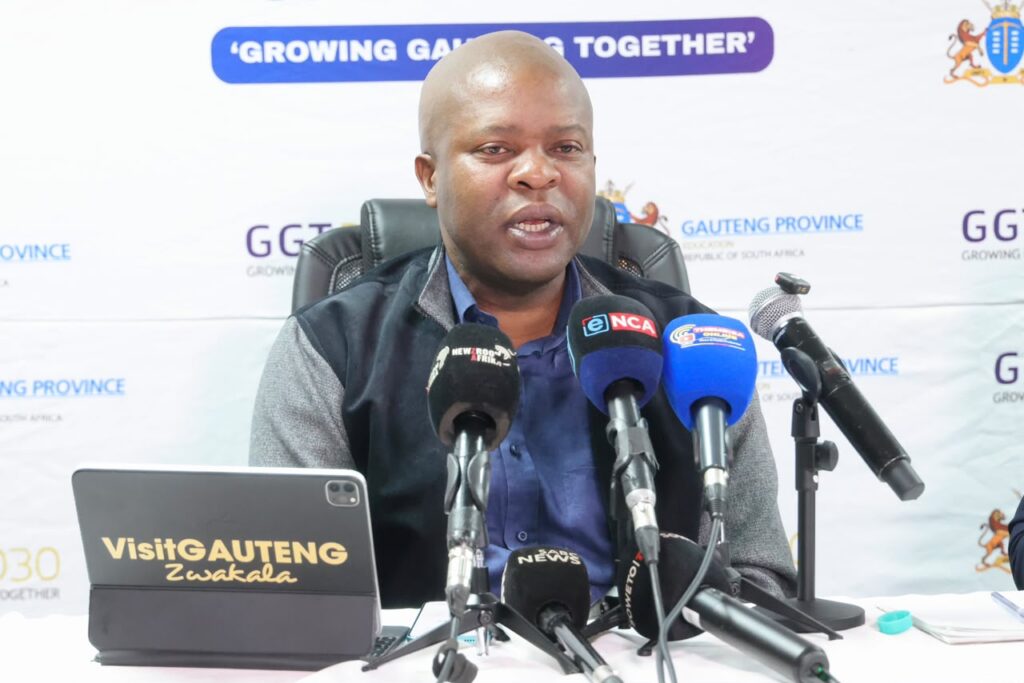
Gauteng MEC for Education, Sport, Arts, Culture and Recreation, Mr Lebogang Maile, has presented the post-consultative report of the provincial “It Takes a Village to Raise a Child” outreach programme, reaffirming that protecting and developing the province’s children requires the collective efforts of government, families, schools and communities.
The extensive outreach programme, conducted between May and July 2026, took government beyond its offices and directly into communities to listen to residents, understand the challenges confronting children and strengthen partnerships aimed at improving education and broader child development.
During the reporting period, 127 engagements and institutional visits were planned, with 90 successfully conducted. These included 41 community meetings, 25 unannounced school visits and 24 sports hub engagements, reaching 11 294 people through direct, face-to-face interactions across Gauteng.
The programme was further amplified through digital platforms, generating more than 10.2 million views and impressions and over 90 700 direct online interactions.
MEC Maile said the figures demonstrate the importance of meaningful public participation in shaping government programmes and ensuring that policies respond to the lived realities of communities.
“The future of the African child cannot be secured by government alone. It demands a united society in which parents, families, educators, school governing bodies, traditional leaders, religious institutions, municipalities, law enforcement agencies, civil society, business, artists, athletes and every resident accepts responsibility for nurturing, protecting and empowering our children.”
SAFE SCHOOLS REQUIRE SAFE COMMUNITIES
School safety emerged as one of the most pressing concerns raised during the community engagements.
Parents, learners, educators and community organisations highlighted challenges including crime, bullying, violence, gangsterism, substance abuse, vandalism, weapons, intimidation and gender-based violence affecting schools and surrounding communities.
The consultations reinforced the principle that meaningful learning cannot take place where learners live in fear.
The Gauteng Department of Education will therefore continue strengthening collaboration with the South African Police Service (SAPS), Community Policing Forums, municipalities, social workers, School Governing Bodies and community structures to develop preventative and coordinated approaches to school safety.
However, the report emphasises that policing alone cannot resolve the social challenges affecting schools.
Parents and communities have an equally important role to play by supporting learner discipline, monitoring attendance, participating in school activities, protecting public facilities and helping create environments in which children can thrive.
BUILDING SPACES FOR LEARNING, SPORT AND CREATIVITY
The consultations also highlighted the importance of libraries, sports hubs, recreational facilities, theatres and arts and cultural centres as essential components of child development.
The provincial government continues investing in community libraries, sports facilities, recreational infrastructure, theatres, archives and refurbished combi courts across Gauteng.
These facilities provide young people with safe spaces to learn, participate in sport, develop creative talents and build positive relationships within their communities.
Sport, in particular, provides young people with opportunities to develop discipline, teamwork, leadership, perseverance and resilience, while helping to create constructive alternatives to crime, gangsterism and substance abuse.
Arts and culture similarly provide platforms for self-expression, preserve African heritage and contribute to opportunities within the creative economy.
QUALITY EDUCATION FOR EVERY CHILD
The outreach programme also brought to the fore concerns about learner admissions, overcrowding, classroom shortages and equitable access to quality education.
Gauteng’s continued population growth and urbanisation place significant pressure on the province’s education infrastructure and learner placement systems.
The provincial government is therefore continuing to strengthen the Gauteng Online Admissions System as part of efforts to improve transparency, fairness and planning in learner placement.
The consultations nevertheless highlighted that technology must be supported by adequate classrooms, educators, learning materials, reliable water and electricity, sanitation, transport and functioning municipal services.
This requires strengthened cooperation between provincial departments, municipalities, national government entities and communities.
EARLY CHILDHOOD DEVELOPMENT A PRIORITY
Early Childhood Development emerged as another important priority during the consultations.
Parents, ECD practitioners and community organisations called for stronger support for ECD centres, simplified registration processes, improved infrastructure and practitioner development.
Through the Bana Pele Mass Registration Drive, the Gauteng Department of Education continues working to strengthen ECD registration, compliance support, access to quality programmes and learning resources.
The province currently has 3 114 Early Learning Programmes on the departmental master list, supporting approximately 134 763 children with more than 11 200 practitioners.
In addition, 1 415 public schools offer Grade R, serving approximately 137 300 Grade R learners.
The province maintains that quality education begins well before Grade 1 and that investment in the early years is fundamental to lifelong learning.
LEAVING NO LEARNER BEHIND
Inclusive education also featured prominently in the engagements, with parents calling for improved access to specialised services, assistive devices, learner transport and therapeutic support.
Gauteng currently supports approximately 2.8 million learners across about 2 200 public schools, including 131 special schools and 51 designated Full-Service Schools. A further 60 public schools are being prepared for Full-Service status.
The province has 30 special schools functioning as resource centres, supported by 236 Learner Support Educators, approximately 670 specialist support personnel and 135 district inclusion officials, alongside educational psychologists working across the province.
More than 43 000 learners currently receive specialised education in Gauteng’s special schools, while additional learners receive support in ordinary public schools through the Screening, Identification, Assessment and Support Policy.
The provincial government says inclusive education must remain a practical expression of equality, dignity and human rights.
GOOD GOVERNANCE AND ACCOUNTABILITY
Residents also raised concerns regarding school governance, financial management and the protection of public resources.
The provincial government has reiterated its commitment to addressing allegations of financial misconduct, procurement irregularities, unauthorised expenditure and the misuse of school finances.
Where wrongdoing is established, appropriate disciplinary, criminal investigation and recovery processes will be pursued in accordance with the law.
The report stresses that every rand intended for education must ultimately serve the interests of learners.
MUNICIPAL SERVICES AND EDUCATION ARE INTERCONNECTED
Communities further highlighted challenges involving water, electricity, roads, illegal dumping, street lighting and environmental conditions around schools.
These concerns demonstrate the importance of cooperative governance, as many of the conditions affecting teaching and learning extend beyond the direct mandate of the Education Department.
The provincial government will continue working with municipalities, national government departments, public entities and community structures to improve coordination and ensure that the broader environment surrounding schools supports effective learning.
LEARNER AND TEACHER WELLBEING MATTERS
The outreach also highlighted the importance of psychosocial support for both learners and educators.
Communities raised concerns about anxiety, trauma, behavioural challenges and the social pressures affecting children.
Gauteng continues strengthening learner support through psychologists, social workers, Learner Support Educators, district-based support teams and partnerships with health and social development professionals.
The province maintains that academic achievement cannot be separated from the emotional and social wellbeing of learners.
EVERYONE HAS A ROLE TO PLAY
The post-consultative report ultimately reinforces the central philosophy behind the programme: education belongs to society as a whole.
Parents, educators, communities, businesses, faith-based organisations, artists, athletes, cultural practitioners, retired professionals and young people all have a role to play in creating an environment in which children can succeed.
The provincial government is calling on parents to remain actively involved in their children’s education, communities to protect schools and public facilities, businesses to support education and skills development, and civil society organisations to contribute to mentorship, social cohesion and youth development.
Young people are encouraged to reject violence, gangsterism, substance abuse and criminality and instead embrace education, discipline, innovation, patriotism and service.
MEC Maile said the programme had demonstrated that communities possess valuable knowledge that must inform government planning and service delivery.
The outreach has shown that strong communities produce strong schools, while strong schools contribute to stronger communities.
As Gauteng moves forward, the provincial government has reaffirmed its commitment to strengthening school safety, expanding quality early learning, improving inclusive education, investing in infrastructure, supporting sport and the creative sector, protecting public resources and working closely with communities.
The message from the programme is both simple and powerful:
Government cannot raise a child alone. It takes a village.
And when that village stands together to protect, educate and empower its children, the entire nation stands to benefit.