

SHARE
EZEKIEL PHALANA
IMAGE SOURCED
Gauteng Provincial Treasury outlines revenue recovery measures, municipal debt interventions and improved financial accountability
Gauteng MEC for Finance Dunga has outlined the province’s financial position, highlighting mounting fiscal pressures, declining revenue, municipal debt and the need for stronger financial discipline across government departments.
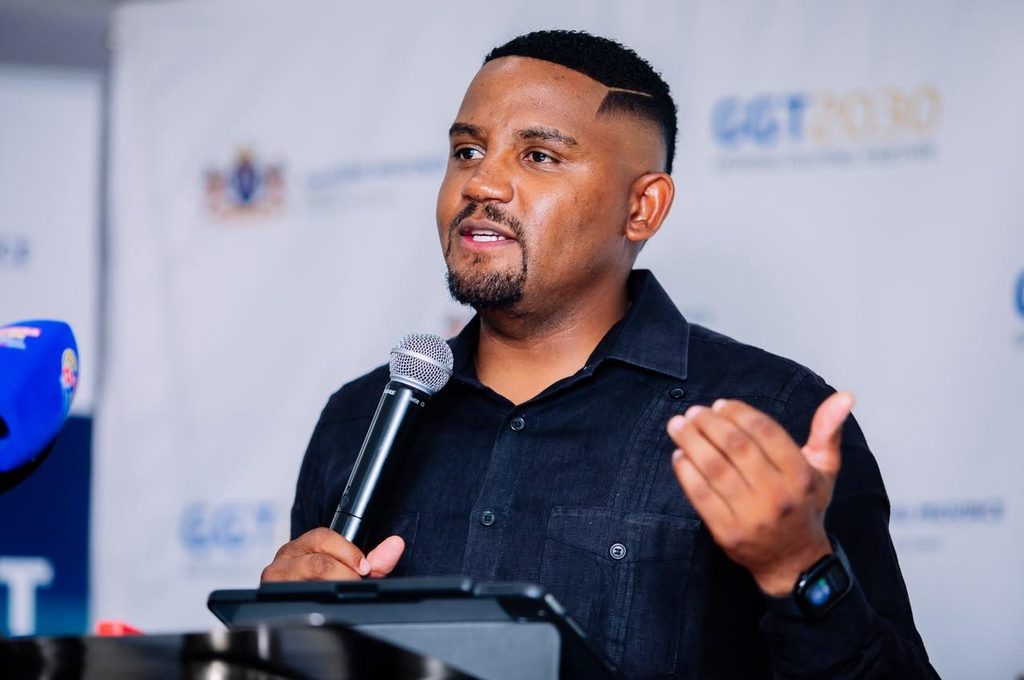
Addressing members of the media during a media engagement session, MEC Dunga presented an overview of the work undertaken by the Gauteng Provincial Treasury since April 2026, outlining progress made, persistent challenges and measures being implemented to strengthen the province’s financial management.
The province operates on a budget of R179.2 billion and faces several significant financial obligations, including outstanding e-toll debt, a Development Bank of Southern Africa (DBSA) loan, declining cash reserves and reduced own-revenue collections.
According to Dunga, Gauteng’s share of the SANRAL e-toll debt, including interest, amounts to R20.1 billion, payable over five years. By the end of September 2026, the province had paid R14.1 billion, leaving an outstanding balance of approximately R6.2 billion. The province also has a remaining DBSA loan balance of R5.6 billion, bringing the combined outstanding obligations to approximately R11.75 billion.
The MEC noted that these financial commitments continue to place pressure on resources needed to deliver essential services, including healthcare, education and housing.
The province’s cash reserves have also declined significantly, falling from R9.8 billion in March 2025 to R5.8 billion in March 2026. Meanwhile, own-revenue collections decreased by 15.9%, from R8.6 billion to R7.2 billion in the previous financial year.
Dunga attributed the revenue challenges partly to sluggish economic growth and changes in the gambling industry, where the shift towards online platforms has affected revenue from traditional, land-based gambling.
To improve collections, the Treasury is pursuing several interventions, including changes to casino taxation, the proposed regulation and licensing of online gambling through the Gauteng Gambling Amendment Bill, 2026, and the appointment of debt collectors to recover money owed to the province. The province is also working to bring the banking of motor vehicle licence fees back under provincial control.
Addressing municipal debt and protecting provincial funding
A key concern raised during the engagement was the R2.5 billion owed by provincial departments to municipalities for rates, taxes and services at the end of August 2026. Although payments of R164 million during August reduced the outstanding amount from R2.7 billion, the majority of confirmed debt remains overdue.
The MEC revealed that 78% of confirmed departmental debt was older than 90 days, with the Department of Infrastructure Development owing approximately R1 billion and the Department of Education owing about R981 million. The City of Johannesburg accounts for approximately R1.4 billion of the outstanding municipal debt.
Dunga warned that the failure to settle municipal accounts could have serious consequences, particularly following National Treasury’s decision to withhold equitable-share transfers from municipalities that failed to meet financial management requirements.
He expressed support for accountability across all spheres of government but cautioned that withholding provincial equitable-share allocations could ultimately affect frontline services and the people who depend on them.
“The equitable share is not a bonus paid to politicians. It pays teachers, nurses, doctors, social workers and police reservists,” he said, emphasising the importance of protecting essential public services while ensuring that government departments meet their financial obligations.
To address the problem, the Executive Council has approved the centralisation of the provincial budget for municipal rates and taxes under Provincial Treasury. Other measures include verifying provincial properties against Deeds Office records, reviewing municipal billing practices, establishing protocols to resolve billing disputes and introducing an early-warning system to prevent accounts from falling into arrears.
Dunga said the message to departments was clear: municipal accounts must be paid within 30 days to protect the province’s financial stability.
Reducing unpaid bills and improving service-provider payments
The Treasury is also prioritising the reduction of accruals, which refer to bills for goods and services already received but not yet paid.
At the end of March 2026, outstanding service-provider bills stood at R11.3 billion, down from R12.4 billion in the previous financial year. Despite the improvement, healthcare and education continue to carry substantial unpaid invoices, amounting to R5.5 billion and R1.9 billion respectively.
The MEC warned that using current budgets to settle previous years’ invoices places additional pressure on departments and threatens their ability to deliver services in the current financial year.
The province has also recorded progress in paying service providers on time. In August, 98% of invoices across the province were paid within 30 days, while year-to-date compliance stood at 82%, compared with 60% during the same period last year.
Township suppliers recorded a 97% payment rate within 30 days.
However, Dunga cautioned against celebrating improvements without acknowledging the underlying challenges. He explained that the Department of Health’s reported August compliance rate would have been 51%, rather than 99%, if older invoices already overdue by more than 30 days had also been included in the assessment.
He stressed that financial reporting must reflect the real state of departmental obligations and support meaningful corrective action.
Infrastructure spending and critical vacancies
By the end of August, Gauteng had spent R74.1 billion, representing 41.3% of its overall budget. Of the R13.3 billion infrastructure budget, R5.16 billion, or approximately 39%, had been spent.
The Department of Human Settlements recorded its strongest infrastructure spending performance in five years. However, the MEC expressed concern over lower expenditure in education and agriculture, where spending stood at 28% and 9% of their respective infrastructure budgets.
Dunga emphasised that underspending on infrastructure can delay the delivery of essential facilities and services to communities.
The Treasury is also working to ensure that the provincial wage bill remains affordable while allowing departments to fill critical vacancies. Between April and August 2026, the Treasury confirmed the affordability of 5,680 posts across 12 departments.
The MEC said this process was intended to support the filling of essential positions, particularly in supply chain management, without placing unsustainable pressure on provincial finances.
Clean audits alongside persistent governance concerns
On governance, Dunga reported that the consolidated financial statements of provincial departments for the 2025/26 financial year received a clean audit, maintaining the previous year’s performance.
However, consolidated public entities continued to receive qualified audit opinions, while irregular expenditure increased by 7% to R8.2 billion. The Department of Health accounted for R3.7 billion, while Education recorded R3 billion.
Fruitless and wasteful expenditure decreased by 8% to R44 million, largely associated with interest arising from late payments.
Contingent liabilities, mainly relating to legal claims, increased to R16.3 billion, including R10.2 billion in medical negligence claims against the Department of Health.
The MEC cautioned that clean audit outcomes must be accompanied by improved operational performance, stronger consequence management and a reduction in financial losses and legal liabilities.
He also raised concern over the killing of public servants, particularly officials working in finance and procurement, describing the attacks as a serious threat to the state and the integrity of public administration.
Strengthening municipalities and advancing public-private partnerships
The Gauteng Provincial Treasury is continuing to support municipalities in improving financial management, including reviewing quarterly reconciliations, strengthening audit support and working with the Department of Cooperative Governance and Traditional Affairs to address unfunded budgets and underfunded mandates.
The province is also exploring public-private partnerships (PPPs) as a means of advancing infrastructure development and improving service delivery.
During August, roadshows involving eight departments and entities identified more than 20 potential projects across schools, hospitals, roads, water, energy and digital infrastructure. Fifteen departmental champions were nominated to support the process.
Dunga said potential partnerships would be assessed for affordability, value for money and effective contract management before being taken forward.
He emphasised that partnerships must serve the public interest and deliver sustainable benefits rather than being pursued for publicity.
A commitment to responsible financial management
Concluding his address, Dunga said the province’s financial recovery must begin with an honest assessment of its challenges, including declining cash reserves, shrinking own-revenue collections, outstanding municipal debt and growing pressure on departmental budgets.
He indicated that the forthcoming Medium-Term Budget Policy Statement and Adjustments Budget would provide an opportunity to outline further measures in response to the province’s financial position.
The MEC also reaffirmed the importance of maintaining stability within the provincial coalition government led by Premier Panyaza Lesufi, arguing that constructive engagement, consultation and cooperation remain essential to effective governance.
Dunga said the Treasury would continue working to strengthen fiscal discipline, improve revenue collection, reduce unpaid bills and promote accountability across provincial departments and municipalities.
He concluded by emphasising that responsible financial management must ultimately translate into better services for the people of Gauteng, particularly those who rely on government for education, healthcare, housing and other essential public services.