

SHARE

The Gauteng MEC for e-Government, Bonginkosi Dhlamini, has committed the Gauteng Department of e-Government to implementing urgent interventions aimed at strengthening digital infrastructure and improving service delivery following an oversight visit to key Gauteng Provincial Network (GPN) sites in Evaton on Wednesday, 29 July 2026.
The oversight visits formed part of the Gauteng Government’s #ImbizoWednesdays programme, which enables Members of the Executive Council to engage communities while monitoring the delivery of government services.
Accompanied by the Head of Department, Ms. Masabata Ngcobo, the MEC visited Levai Mbatha Community Health Centre, Evaton Library and Jordan Secondary School to assess the state of digital infrastructure and identify practical solutions to challenges affecting connectivity and access to digital services.
At Levai Mbatha Community Health Centre, the MEC noted that unstable network connectivity continues to disrupt critical healthcare systems used for patient registration, access to patient records, laboratory results and pharmacy services. These interruptions force healthcare workers to revert to manual processes, resulting in delays that affect the quality and efficiency of patient care.
To address these challenges, the department resolved to immediately deploy an applications support team to investigate system-related issues, stabilise the Gauteng Provincial Network, and expand Wi-Fi coverage across the entire health facility, including newly renovated buildings. The department will also assess the feasibility of providing public Wi-Fi for patients and visitors.
The oversight further identified security concerns after management reported that several CCTV cameras at the facility are not operational. The department will engage the relevant stakeholders, including Community Safety and VumaCam, to explore measures to restore surveillance infrastructure and improve the safety of both staff and patients.
The delegation also confirmed that the Employee Self-Service (ESS) platform is ready for implementation, with staff already trained and the system scheduled to go live on 1 August 2026.
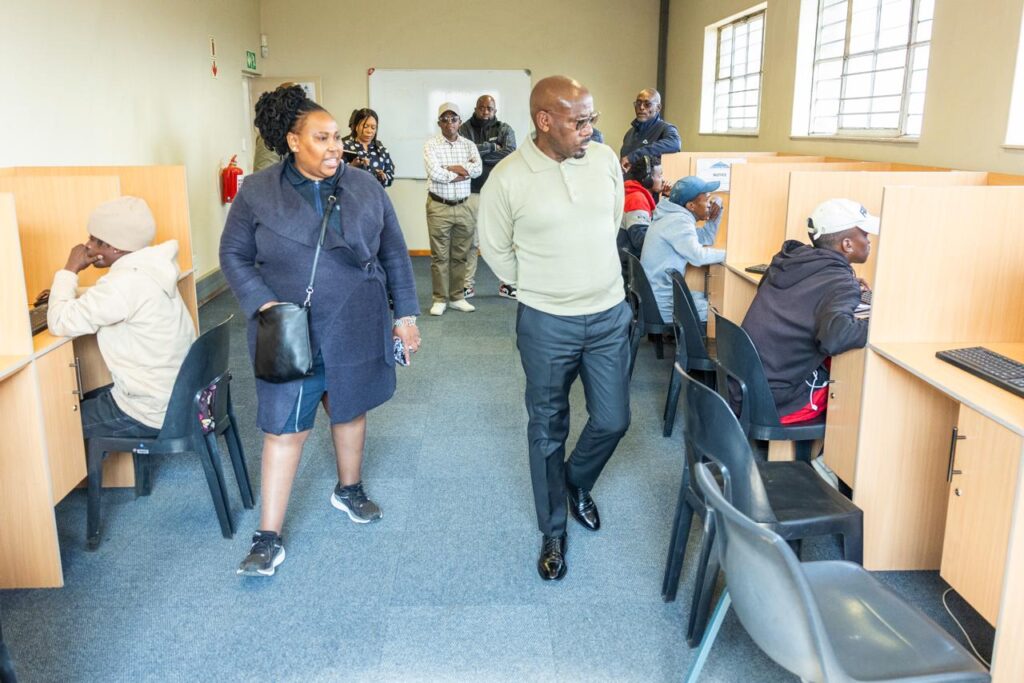
At Evaton Library, the MEC assessed the ICT infrastructure that enables residents to access free internet, online learning opportunities, government services and employment platforms. While Wi-Fi connectivity is available, the department noted the need to provide new computers to further strengthen the library’s role as a community digital hub.
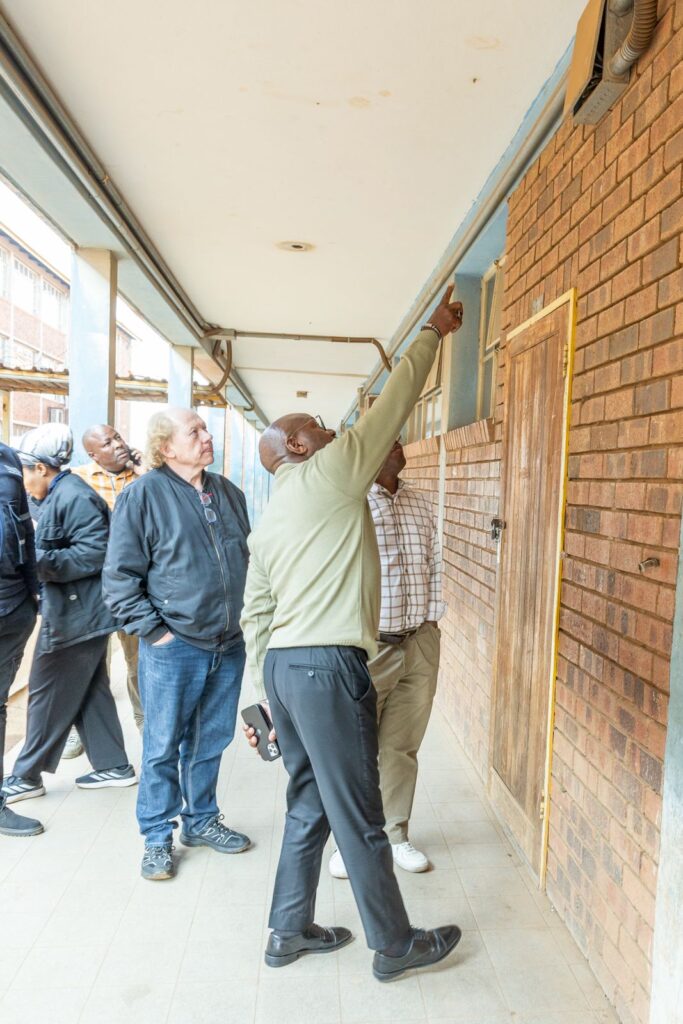
The final stop was Jordan Secondary School, where the MEC witnessed first-hand the impact of theft and vandalism on government ICT infrastructure. Damaged electrical wiring has left several smart boards non-functional, while parts of the school remain without Wi-Fi connectivity, limiting the effective use of digital learning technologies.
The department will work with relevant stakeholders to explore interventions that will restore damaged infrastructure and protect government investments in digital education.
MEC Bonginkosi Dhlamini said reliable digital infrastructure is essential to improving the quality of public services and ensuring that community’s benefit from government’s investment in technology.
“Our oversight visits are about more than identifying challenges, they are about ensuring that government acts swiftly to resolve them. Every clinic that loses connectivity, every school that cannot fully use digital learning tools, and every community facility without reliable technology affects the quality of services our people receive. We have identified practical interventions and will work with our partners to implement them as quickly as possible. Our commitment is to build a connected Gauteng where technology improves healthcare, education and access to government services for every resident,” said MEC Dhlamini.
The oversight programme concluded with the Gauteng Government’s weekly #ImbizoWednesdays community engagement, led by Premier Panyaza Lesufi, where residents raised concerns relating to electricity, infrastructure vandalism, service delivery and community development. The engagement reaffirmed government’s commitment to listening to communities and responding to their needs through coordinated action.
The Gauteng Department of e-Government will continue to strengthen the Gauteng Provincial Network as a key enabler of digital transformation across the province. By investing in reliable connectivity, modern ICT infrastructure and secure digital platforms, the department remains committed to building a capable, responsive and technology-driven government that delivers better services and improves the lives of the people of Gauteng.
INFO SUPPLIED.