

SHARE
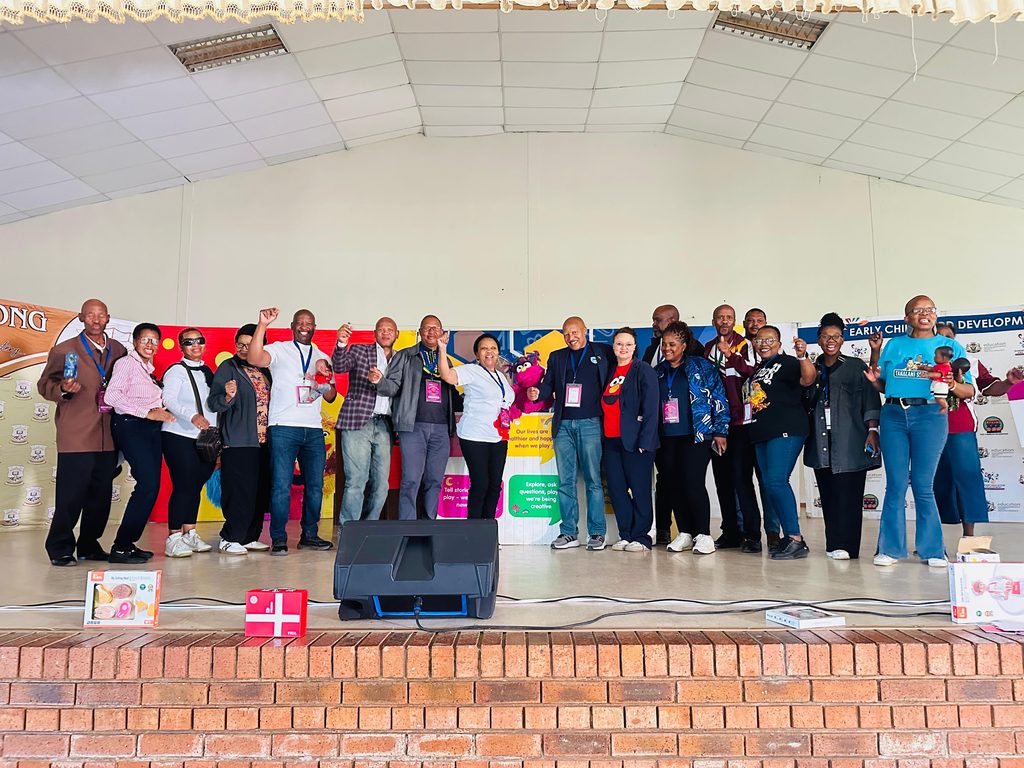
More than a year after Sesame Workshop’s Watch Play Learn programme began working with 36 Free State ECD centres, new findings show progress in the skills young children need to learn, communicate and participate, with some of the strongest gains recorded where children started with lower scores.
Some of the biggest gains in a Free State early-learning programme have come from Early Childhood Development (ECD) centres where children started with the lowest scores.
More than a year after Sesame Workshop South Africa’s Watch Play Learn programme began working with 36 centres in the province, an evaluation of 682 participating children aged four to six revealed significant progress in every area measured. Social and emotional development showed the largest increase, at 26.5 percentage points, followed by early numeracy at 17.9 points, motor development at 11.9 points and early literacy at 11 points. In practical terms, these gains indicate progress in the developmental areas children rely on to interact and participate, engage with early number and language concepts and build the physical control needed for activities such as drawing and writing. Notably, centres with lower starting scores recorded the largest gains.
Behind those numbers are skills that help establish how a young child experiences learning: the confidence to join in, the words to communicate an idea or ask for help, the ability to stay with something when it becomes difficult, the curiosity to explore language and numbers through play and the growing physical control to draw, build or eventually write. These are the foundations children draw on every day as they learn alongside others and prepare for the demands of a formal schooling environment.
The findings were shared in Qwa-Qwa last week as Sesame Workshop South Africa, Standard Bank and the Free State Department of Education formally launched Watch Play Learn’s second phase. Over two days, the partners visited participating ECD centres, examined the first year’s findings with practitioners and stakeholders and closed with a Play Festival where children and families experienced the learning through play behind the programme.
Learning one year later
When Standard Bank announced its support for Watch Play Learn in October 2025, the programme set out to reach more than 2,300 children aged three to six in 36 Free State ECD centres and support 86 teachers and practitioners.
A year later, the target has been reached, and all 36 original centres are maintaining momentum. Support has also grown from the original 86 practitioners to 127 practitioners, principals and centre leaders.
Watch Play Learn combines Sesame Workshop educational media with guided play and support for the adults working with young children. However, its first year also showed that access to good educational content was only part of the equation, with implementation partners learning alongside the centres they support.
In certain cases, connectivity made online resources difficult to use consistently. The programme also found that simply watching educational content did not necessarily turn into active learning through play. Practitioners needed more support to use the material in ways that worked within the routines and realities of their own classrooms.
The second phase responds directly to that experience. Content is now available offline, coaching and mentoring for practitioners have been strengthened and lessons are more deliberately sequenced and connected to classroom routines. Sesame Workshop has also worked with the Free State Department of Education to align the programme more closely with the provincial ECD curriculum, while stronger monitoring will provide a clearer picture of how it is being used.
Mari Payne, Deputy Managing Director and Senior Director, Education and Programmes at Sesame Workshop, South Africa, comments,“The first year gave us encouraging evidence that Watch Play Learn is making a difference, with meaningful gains in every area of development we assessed.
“It also showed us where we can do more. Good content is an important starting point, but what happens around that content is equally valuable: how practitioners use it, how well it fits into the daily rhythm of an ECD centre and whether they have the support to turn what children see into opportunities to talk, play and learn.
“Those lessons have helped us strengthen the programme for its next phase. “We needed to understand how Watch Play Learn was actually being used in ECD centres: what practitioners needed, where connectivity was getting in the way and how the activities could fit more naturally into the rhythm of a busy classroom.
“If we want learning through play to make a meaningful difference for children, it has to work for the people delivering it every day.”
Taking learning home
In focus groups held in February, parents described children bringing Watch Play Learn songs, stories, conversations and play activities home with them. Practitioners and caregivers also reported changes in children’s confidence, communication, participation and engagement.
The qualitative observations add something the percentages cannot: a glimpse of learning travelling with children beyond the ECD centre and becoming part of conversation and play at home.
“Early Childhood Development is one of the most important areas of social investment, with the potential to create meaningful and lasting impact across generations. Evidence demonstrates that access to quality ECD can lay a strong foundation for improved educational outcomes, future employability and meaningful participation in communities and the economy. At Standard Bank, we recognise the critical role that ECD centres play in creating these foundations and believe that targeted investment in the sector can help address systemic challenges, strengthen communities and contribute to more inclusive and sustainable socioeconomic outcomes,” says Zanele Shabalala, CSI Manager at Standard Bank.
Seeing the programme at work
On Friday, 2 October, stakeholders visited participating ECD centres to see Watch Play Learn used in classrooms before reviewing the endline findings and discussing what they had learned during the programme’s first year.
Saturday’s formal Phase 2 launch and Play Festival put the children at the centre of proceedings. The Free State MEC for Education, Dr Mantlhake Julia Maboya joined Standard Bank, Sesame Workshop South Africa, ECD practitioners, caregivers and children for a programme of activities including storytelling and literacy, numeracy, social and emotional learning, movement, building, creative arts, science and home learning.
MEC, Dr. MJ Maboya comments: “The value of this work lies in what we can learn from it. We now have evidence from children, experience from practitioners and feedback from families that can help us understand what effective early learning support looks like in our communities. As we strengthen early childhood development in the Free State, these findings give us practical experience to build on and important questions to take into the work ahead.”
What the first year makes possible
Watch Play Learn’s first year yielded measurable evidence from children, experience in ECD classrooms and feedback from the practitioners and families using the programme.
That experience has already changed the way Watch Play Learn works. Offline content, increased coaching and closer curriculum alignment came directly from challenges encountered during the first year, providing a stronger practical base from which to consider the programme’s future.
Additionally, Sesame Workshop has developed a model for possible expansion beyond the current 36 centres, with scale and timing to be informed by funding, partner alignment and further planning.
About Sesame Workshop South Africa
Sesame Workshop South Africa is the impact nonprofit whose mission is to help children everywhere to be stronger, smarter, and kinder. For over 25 years, we have worked at the intersection of education, media, and research, creating joyful experiences that enrich minds and expand hearts, all in the service of empowering each generation to build a better world.
Our beloved characters, iconic shows, direct services, and outreach in communities bring playful early learning to children in the context of all the ecosystem partners (families, parents, ECD Centres, educational institutions etc.) that enable them to be the best they can be. Takalani Sesame, the South African adaptation of Sesame Street launched in 2000 and has impacted millions of young lives to date.
Follow Sesame Workshop South Africa and Takalani Sesame on LinkedIn, Facebook, X, Instagram, YouTube and via the website.
INFO SUPPLIED.