
SHARE
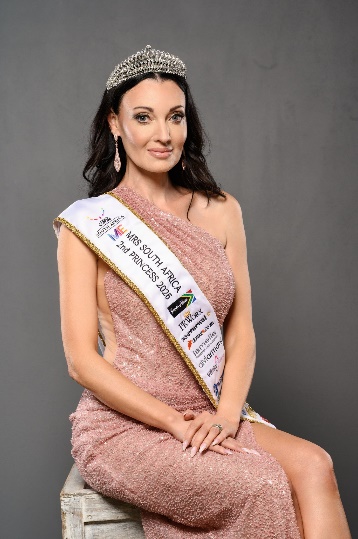
As an ambassador for human trafficking awareness, Oosthuizen is calling for greater education and awareness to help South Africans recognise grooming, deception and exploitation.
South African police recorded 17 kidnapping cases nationally in which human trafficking was identified as a circumstance during January – March 2026, with nine of those cases recorded in Gauteng, according to SAPS quarterly crime statistics.
This follows 67 kidnapping cases nationally in which human trafficking was identified as a circumstance during October – December 2025, with 62 of those cases recorded in Gauteng.
Against this backdrop, Talitha Oosthuizen, 1st Princess Mrs South Africa and ambassador for Human Trafficking Awareness and Education, is using this week to call for greater public education about trafficking, including how victims can be groomed, deceived, coerced or exploited.
The SAPS figures do not mean that every kidnapping is a trafficking case, nor that trafficking always involves kidnapping. Rather, they highlight a documented intersection between the two crimes.
“We need to understand that human trafficking does not always look like a kidnapping. People can be groomed, manipulated, deceived or coerced into situations where they are exploited. That is why education is so important,” says Oosthuizen.
Working with Shattering Shackles, an organisation involved in combating human trafficking and supporting victims, Oosthuizen is taking the awareness message into schools and communities.
For Shattering Shackles founder Susan Saila, public awareness is critical to helping people recognise potential trafficking situations and understand the tactics perpetrators may use.
Oosthuizen says the focus must be on prevention as well as responding when victims are identified.
“Awareness has to happen before someone becomes a victim. We need parents, teachers, women and young people to know what grooming can look like, to question suspicious offers and to know where to seek help when something does not feel right.”
Human trafficking can involve sexual exploitation, forced labour and other forms of exploitation, and victims can be targeted through deception, coercion and false promises. Online platforms and social media can also be used to groom, manipulate or deceive potential victims, making digital awareness an increasingly important part of prevention.
During Human Trafficking Awareness Week, Oosthuizen is urging South Africans not to regard trafficking as a distant or hidden crime, but to learn the warning signs and help create communities where potential victims can be identified and supported.
Human trafficking awareness starts with understanding how exploitation happens – and knowing what to look for.
Talitha Oosthuizen, 1st Princess Mrs South Africa and ambassador for Human Trafficking Awareness and Education
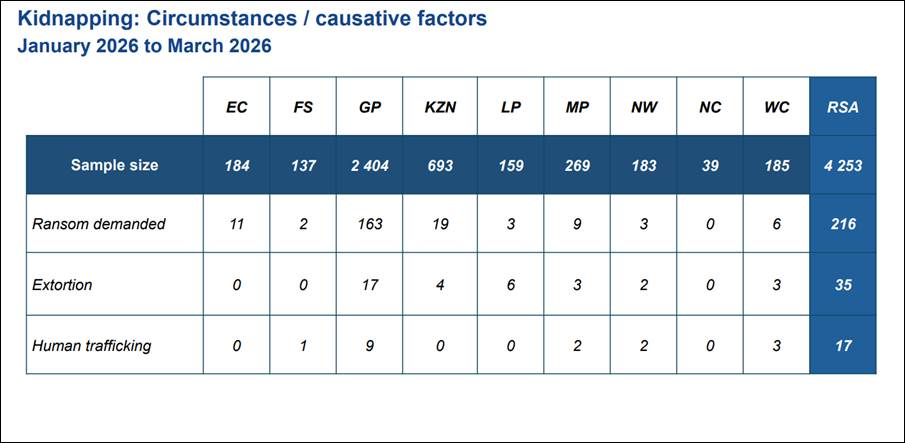
Sources for Statistics:
SAPS Fourth Quarter Crime Statistics 2025/2026, “Kidnapping: Circumstances / causative factors”, January–March 2026; SAPS Third Quarter Crime Statistics 2025/2026, “Kidnapping: Circumstances / causative factors”, October–December 2025.
*The 2026 picture: SAPS recorded 17 kidnapping cases nationally between January and March 2026 in which human trafficking was identified as a circumstance, including nine in Gauteng. Source: SAPS Fourth Quarter Crime Statistics, January–March 2026, “Kidnapping: Circumstances / causative factors”, p.80.
https://www.saps.gov.za/services/downloads/2025/2025-2026_-_4th_Quarter_WEB.pdf
*Human trafficking – 67” nationally and “Gauteng – 62.” The relevant table appears on page 9 of the parliamentary analysis/document. Parliamentary analysis of SAPS crime statistics
*Trafficking definition/forms of exploitation: The Prevention and Combating of Trafficking in Persons Act 7 of 2013 provides the South African legislative framework for trafficking in persons and the forms of exploitation covered by the offence. South African Government – Prevention and Combating of Trafficking in Persons Act
INFO SUPPLIED.