

SHARE
EZEKIEL PHALANA
ADDITIONAL INFO SUPPLIED
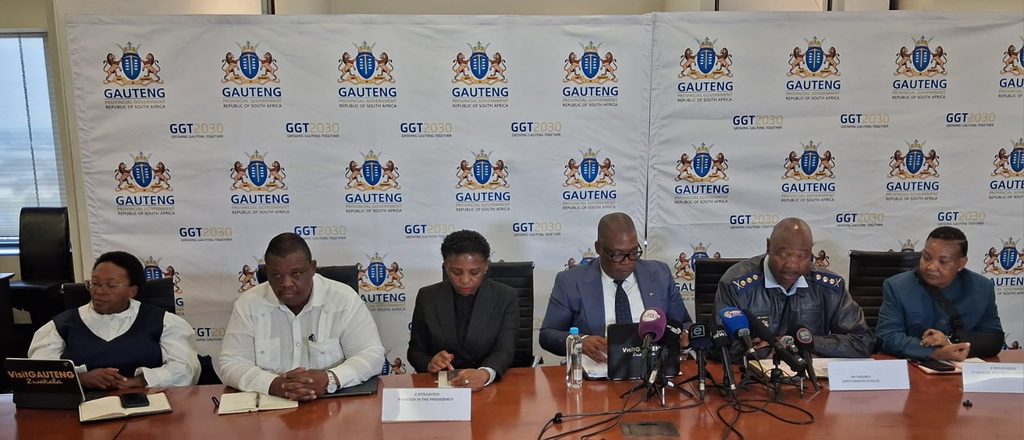
The Gauteng Provincial Government has intensified its response to gender-based violence and femicide (GBVF), committing to stronger coordination, faster case recovery, improved forensic processing and greater support for survivors.
The commitment follows an urgent Intergovernmental Relations (IGR) meeting convened after President Cyril Ramaphosa’s national address on GBVF on 29 September 2026. The meeting brought together provincial leaders, Executive Mayors, Municipal Managers and Ministers from national government to translate the President’s directives into coordinated and measurable action across Gauteng.
A central outcome of the meeting is the establishment of a single tracking and reporting mechanism through which progress will be monitored weekly from municipalities to provincial and national government.
The mechanism is intended to strengthen accountability, streamline reporting, eliminate duplication and provide a clear picture of progress, outstanding gaps and areas requiring further intervention.
Gauteng will build on existing IGR structures that were previously used in preparation for the G20 Summit and subsequently to coordinate responses to water and electricity disruptions.
Three existing committees will be utilised as part of the response: the Intergovernmental Committee on Disaster Management, the Intergovernmental Committee on Police, and the Intergovernmental Relations Committee.
Accelerating justice and forensic investigations
One of the key interventions is a provincial case-recovery operation targeting unresolved murders, attempted murders, rapes and serious sexual offences involving women and children.
Within 60 days, Gauteng will undertake a comprehensive audit of these cases, examining the age of cases, forensic backlogs, suspects who have not been arrested and delays in investigations or prosecutions.
Within 90 days, every priority or stalled case is expected to have an individual recovery plan with defined actions, responsible officials and clear deadlines.
The MEC for Community Safety and the Provincial Commissioner will lead the work jointly with the National Prosecuting Authority, while respecting prosecutorial independence.
The province will also assess its forensic backlog, including the age and volume of outstanding work as well as staffing and equipment shortages. Priority DNA and forensic samples linked to rape and murder cases involving women and children will be prioritised for urgent processing.
Making communities safer
All municipalities in Gauteng have been directed to begin safety audits of high-risk areas within seven days, working alongside provincial departments and the police.
The audits will focus on hazards that can contribute to unsafe environments, including broken streetlights, overgrown areas, abandoned buildings, unsafe transport routes and poorly secured parks.
Within 90 days of each audit, the most urgent hazards must either be addressed or placed on a funded implementation plan with clear deadlines. Progress will be made public so that communities can monitor what has been done.
The province has also linked community safety to its ongoing energy interventions. Following an Energy Response Plan meeting, Gauteng resolved, in partnership with Eskom and City Power, to install and electrify more than 140 transformers across the province as part of efforts to strengthen electricity infrastructure and replace failed equipment.
Tackling alcohol-related violence
Gauteng will support a coordinated legislative and enforcement package addressing alcohol-related violence, which is expected to go to Cabinet within 60 days.
The province and municipalities will also intensify enforcement of liquor licensing regulations and take action against unlicensed liquor outlets and after-hours trading.
Strengthening places of safety and survivor support
Gauteng has introduced an additional core intervention focused on strengthening existing places of safety for vulnerable women.
An audit will assess places of safety, buildings, staffing and funding gaps to ensure that survivors know where to access assistance and that facilities are adequately equipped to provide support.
The province will also strengthen its support infrastructure, including seven specialised Sexual Offences Courts with 144 victim-friendly rooms and 19 Medical Legal Clinics aimed at assisting with the preservation of forensic evidence.
SAPS GBV desks will be strengthened to facilitate faster handling of cases, while 1,022 GBV brigades will be deployed across 122 high-risk police precincts with the necessary tools of trade.
The Department of Social Development will also add 56 social workers to strengthen support services.
Prioritising high-risk police stations
Additional resources will be prioritised for the ten police stations recording the highest volume of rape cases in Gauteng.
Among the stations identified are Rietgat, Alexandra, Mamelodi, Diepsloot, Ivory Park, Dobsonville, Redhill, Midrand and Thembisa, among others.
The intervention is intended to strengthen policing capacity and improve the ability of law-enforcement agencies to respond to cases in areas experiencing significant levels of reported sexual violence.
Technology and innovation
Gauteng will continue to use technology to improve emergency response and connect residents with support services.
The province will utilise tools including the e-Panic Button and integrated CCTV networks, while emphasising the importance of protecting victims’ personal information and privacy.
The provincial government says previous technical challenges affecting the e-Panic Button have been resolved and is encouraging residents to download the application again.
Technology, however, will complement rather than replace effective policing, social services and community-based interventions.
Government, civil society and communities working together
The provincial government has emphasised that the fight against GBVF cannot be addressed by government alone.
Gauteng will strengthen partnerships with civil society organisations that provide safe shelters, counselling and legal assistance to survivors, while also engaging the private sector on workplace policies and public awareness initiatives.
The province will further pool provincial, municipal and national capacity for case recovery and forensic work and request additional allocations through the Medium-Term Budget Policy Statement for Family Violence, Child Protection and Sexual Offences Units, Sexual Offences Courts, Thuthuzela Care Centres and shelters.
Gauteng will release its first consolidated baseline report by 9 October 2026, followed by quarterly public progress reports to promote transparency and accountability.
Weekly by-law enforcement operations
As part of broader efforts to improve safety and order, all municipalities across Gauteng commenced coordinated weekly by-law enforcement operations on 1 October 2026.
The operations will bring municipalities and relevant law-enforcement agencies together to address illegal activities, non-compliance and practices that undermine the safety, cleanliness and orderly functioning of communities.
The operations will be intensified every week.
A call for collective action
The provincial government has called on men and boys, families, schools, workplaces and faith-based organisations to reject violence, support survivors and challenge the normalisation of abuse.
Gauteng says the response to GBVF must be measured not only by government commitments, but by tangible improvements in the lives and safety of communities.
As the province prepares for the upcoming 16 Days of Activism, Gauteng is calling for a renewed focus on peace, support and recovery alongside the continued fight against gender-based violence and femicide.
The provincial government says the immediate priority is clear: strengthen coordination, mobilise resources, improve accountability and ensure that interventions reach communities where they are needed most.