
SHARE
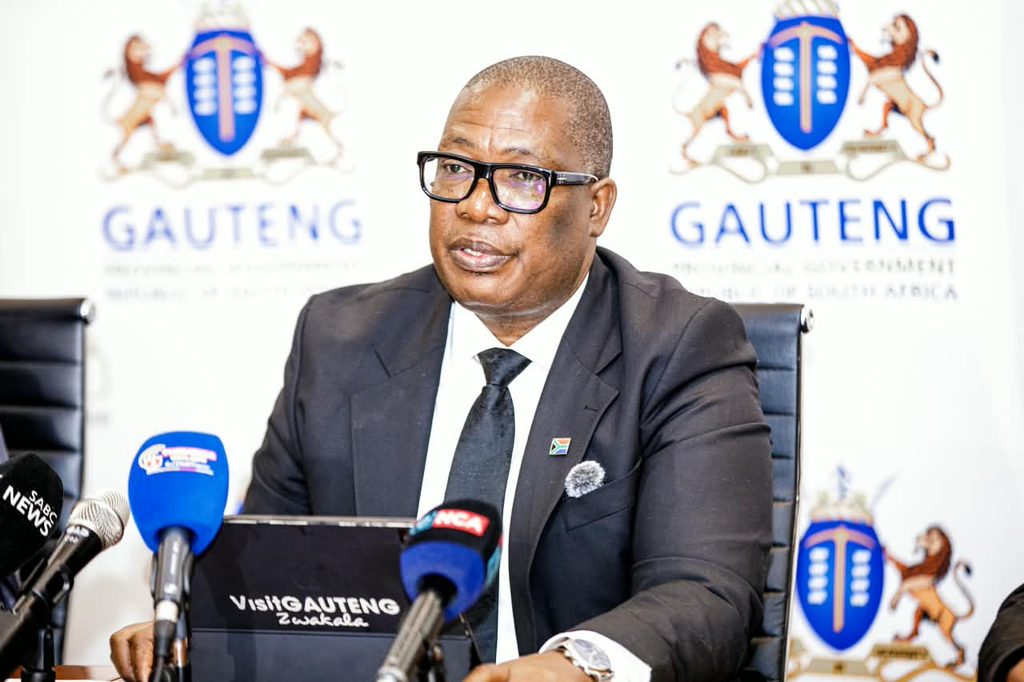
Good morning, members of the media, colleagues and the people of Gauteng. Before addressing any other matter, I wish to express my profound sadness and deep concern at the recent discovery of the bodies of eight women in separate incidents across Ekurhuleni. This is a heartbreaking and deeply disturbing development that has shocked the province and reminded us of the devastating human cost of violence against women.
Every woman has the right to live free from fear, violence and harm, and the loss of these lives is a tragedy for their families, loved ones and communities. On behalf of the Gauteng Provincial Government, I extend our sincerest condolences to all those affected during this difficult time. We reaffirm our commitment to supporting law enforcement agencies as they work tirelessly to investigate these incidents, bring those responsible to justice and ensure that the full might of the law is brought to bear against perpetrators of such heinous crimes.
2026/2027 Quarter 1 Crime Statistics
It is against this sombre backdrop that we reflect on the latest crime statistics presented by the SAPS Gauteng Acting Provincial Commissioner, Major General Fred Kekana. The statistics show that contact crimes declined by 3.0% during the first quarter of the 2026/27 financial year, with notable reductions in murder, sexual offences and aggravated robberies. Operation Shanela also continued to deliver significant results through targeted arrests, the recovery of illegal firearms, drugs, stolen vehicles and counterfeit goods, and the disruption of organised criminal activity.The decline in crime reflects the impact of coordinated law enforcement efforts and the strong partnerships that have been forged between government, communities, business and civil society. However, the recent incidents in Ekurhuleni remind us that our work is far from complete. We must intensify efforts to combat gender-based violence and femicide, strengthen community safety interventions, and ensure that women are safe in their homes, workplaces and communities.
Ladies and gentlemen, Through our Intergovernmental Relations (IGR) approach and the Integrated Crime and Violence Prevention Strategy, we are strengthening collaboration among all stakeholders to address both crime and its root causes. I wish to commend the South African Police Service, the Gauteng Traffic Police, Metropolitan Police Departments, Business Against Crime South Africa, Community Police Forums and all our community volunteers for their unwavering commitment to making Gauteng safer.
While we welcome this progress, we remain mindful that the fight against crime is far from over. The increases in attempted murder and assault-related crimes remind us that violence remains a serious challenge requiring sustained intervention. As the provincial government, we remain committed to strengthening integrated policing, improving community safety, and mobilising all sectors of society to ensure that every resident of Gauteng can live, work and invest in a province that is increasingly safe, secure and resilient.Progress on the Lenacapavir Roll-out In June 2026, Gauteng province commenced with the phased introduction of Lenacapavir across five districts in 133 health care facilities as part of the National HIV prevention strategy. The injection is given twice a year and can reduce the risk of HIV acquisition when used alongside safer-sex practices.
Between June and August this year, the Department of Health recorded 24 390 new Lenacapavir initiations, ensuring that initiates are protected against HIV for six months. Johannesburg leads with 9 723 initiations, while Sedibeng recorded the highest performance in July at 136% and currently leads August performance at 56%.Governance, Lifestyle Audits and Investigations We reaffirm our commitment to clean governance, transparency, and accountability. In this regard, the implementation of lifestyle audits is continuing. The current phase focuses on officials responsible for Supply Chain Management (SCM) and Finance functions across all GPG departments. The audits are presently underway, with a total of 3,671 officials having submitted their lifestyle audit forms. The reports for the Office of the Premier and Gauteng COGTA have been finalised.
I have requested that the SIU conduct a comprehensive forensic investigation into the lifestyles of 14 officials from the Office of the Premier (8 officials rated as high risk and 6 as medium risk) and 6 officials from Gauteng COGTA (2 officials rated as high risk and 4 as medium risk). In total, 20 officials from both OOP and Gauteng COGTA have been referred for further investigation. Appropriate actions will be taken once the SIU has completed its comprehensive investigation. I must also indicate that they have started with the lifestyle audits of the SCM and Finance officials at the Gauteng Department of Health. The first audit at Health is focusing on Tembisa Hospital.
I have also requested that the SIU conduct lifestyle audits for the three new HoDs for departments of Agriculture, Sport, Arts Culture and Recreation, as well as Roads and Transport. The State Security Agency is finalising the vetting and lifestyle audits of MECs for e-Government, Environment, and Roads and Transport. We have concluded all the lifestyle audits of all CEOs and Heads of Departments. Nonkwelo Investments (Pty) Ltd settlement The Gauteng Provincial government welcomes the successful resolution of its long-standing dispute with Nonkwelo Investments (Pty) Ltd through a court-mediated settlement concluded in November 2025.
The province can confirm that the full amount advanced under the facility, namely R7,246,127.43 (Seven Million Two Hundred and Forty-Six Thousand One Hundred and Twenty-Seven Rand and Forty-Three Cents), has been recovered, thereby safeguarding public funds and protecting the interests of the organisation and its beneficiaries.
Gauteng Provincial Audit Outcomes 2025-26 In the 2025/26 financial year, five of these departments (Office of the Premier, Treasury, eGov, COGTA and Community Safety) sustainedclean audit opinions with no findings. Nine departments achieved unqualified opinions with findings. Out of the nine, five departments sustained outcomes from the previous year, two departments (Economic Development and Transport) regressed from clean to unqualified. One new department (Environment) came in as unqualified. There was a noted improvement by the Department of Sports, Arts, Culture and Recreation from a qualification from the prior year. These mixed results highlight both areas of sustained excellence and pressing needs for improved controls and accountability in specific entities.
Final Report on Kopanong Precinct Project
As you may recall, I previously expressed concern over allegations of fruitless and wasteful expenditure arising from the leasing of privately owned buildings to accommodate nine Gauteng Provincial Government departments while government-owned buildings remained vacant. It was against this backdrop that I directed a forensic investigation into these allegations.
The forensic investigation has now been concluded, and its findings reveal significant shortcomings in the management of these lease agreements. These include the absence of proper procurement or approved deviation processes, weak contract management practices such as automatic lease renewals and repeated month-to-month extensions, and non-compliance with the required approval processes for contract extensions and month-to-month agreements.
The investigation identified irregular expenditure amounting to R558,079,624.71. Importantly, the report recommends that the Department of Infrastructure Development reassess its current leasing strategy, particularly considering the delays in implementing the Kopanong Precinct Project. I have noted the findings of the report and will ensure that all its recommendations are implemented as a matter of priority. We remain committed to strengthening governance, improving accountability, and ensuring that public resources are managed efficiently and in the best interests of the people of Gauteng.
Governance and Oversight Matters (SIU and Public Protector Reports)
The Gauteng Provincial Government continues to strengthen accountability and consequence management through theimplementation of recommendations arising from investigations by the Special Investigating Unit (SIU), forensic investigators and the Public Protector. In the Farmyard Project investigation at the Department of Agriculture and Rural Development, the SIU recommended disciplinary action against 10 current and former officials, criminal referrals where appropriate, and lifestyle audits. The Office of the Premier will support the disciplinary process through the appointment of an Evidence Leader and Chairperson, while the SIU pursues a further investigation into the allocation of grant funding.
In the Department of Sport, Arts, Culture and Recreation, disciplinary proceedings will commence against four senior officials following a forensic investigation into recruitment irregularities. Similarly, the Department of Economic Development will implement recommendations arising from the Mega Hubs investigation, including disciplinary action, law enforcement referrals and strengthened project management controls after findings of irregular, fruitless and wasteful expenditure.
The Provincial Government has also committed to implementing the Public Protector’s recommendations on the spaza shop food safety investigation and the delays in the repair of Charlotte Maxeke Johannesburg Academic Hospital. A provincial task team has been established to drive implementation of the food safety recommendations, while remedial actions at Charlotte Maxeke Hospital are already underway in line with the approved implementation plan.
Economic Development: Advancing Investment and Industrial Growth Since April, Gauteng has made strong progress in attracting investment to grow the economy and create jobs. The Gauteng Investment Conference in April secured R200 billion in new private investment pledges. This brings the total from the past two years to more than R500 billion. Since June, the provincial government has been hosting Market Access
Expansion Workshops for entrepreneurs and SMMEs. These workshops help small businesses and manufacturers meet the standards needed to sell to big retailers. In July, the Automotive Learning Centre was relaunched as a Manufacturing Centre of Excellence. It trains people in modern skills such as robotics, AI and electric vehicles. Other events, such as the Local Economic Development (LED) Strategy Assessment Workshop and the 4th Gauteng Women in BusinessConference, focused on improving local economic plans in municipalities. They also supported women-owned businesses with better access to markets, finance and contracts. Ultimately, these efforts are about ensuring that economic growth translates into jobs, opportunities and better livelihoods for the people of Gauteng.
New Concessionaire for Gautrain
The province has advanced the process to appoint a new concessionaire to operate, maintain and modernise the Gautrain. Negotiations have already been concluded and finalised. The National Treasury has granted all the necessary approvals for the project to reach financial close. This will allow the new concessionaire to start operations on 28 September 2026. This is a very exciting phase for the province. New investments in the Gautrain will enable expanded operating hours, expanded taxi routes for feeder services, upgrades to infrastructure at various stations, additional new trainsets, and the introduction of renewable energy.
Local Government Turnaround
Despite isolated challenges relating to water provision, significant progress has been made in restoring water supply systems and improving electricity distribution across the province. As part of the Local Government Turnaround Strategy, the province, through the Department of Cooperative Governance and Traditional Affairs (CoGTA) and e-Government, is accelerating digital transformation through Smart City initiatives. These projects are designed to improve municipal efficiency, strengthen decision-making, and enhance service delivery. Key initiatives include the e-Indigent Register, Water Solutions Dashboard, Local Government Turnaround Barometer, Disaster Management Information and Communications System (DMICS), and Gauteng@Your Service. We continue to make steady progress in strengthening local government through improved governance, accountability, and intergovernmental relations. Council stability has been maintained across all eleven municipalities, with functional Financial Misconduct Boards now in place.
We have also recorded a reduction in unauthorised, irregular, fruitless and wasteful expenditure, while targeted support is underway to improve future audit outcomes.Although some municipalities remain under financial pressure, there are encouraging signs of recovery. Mogale City has strengthened its financial position, Midvaal continues to perform well, and the province achieved a 96% Municipal Infrastructure Grant expenditure rate by the end of June 2026, demonstrating strong implementation of infrastructure projects. In addition, we urge Gauteng residents to refrain from building on or near critical infrastructure servitudes. Illegal developments in these areas place immense strain on government resources while exposing communities to significant risks.
Update on E-Toll Debt Payment
The Gauteng Provincial Government has again shown strong financial responsibility and a commitment to good governance by continuing to honour its e-toll debt. As at the end of June 2026, the province has paid R 13.9 billion of its R20.086 billion e-toll-related debt and Gauteng Freeway Improvement Project maintenance obligations. This timely payment shows good financial management and a clear commitment to meet its obligations, so that important infrastructure projects can keep benefiting residents across the province. Following the June 2026 instalment payment, the outstanding balance stands at approximately R6.17 billion. While making these repayments, the province is also working to meet increasing demands for services. It is putting healthcare and education first, and it continues to invest in infrastructure to support economic growth.
North West Transport Investment
Last month, together with the North West Provincial Government, we announced the phased resumption of North West Transport Investment (NTI) bus services in Hammanskraal and surrounding areas following significant progress in operational planning, employee engagements, security arrangements, fleet readiness, ticketing systems and coordination with subcontractors.
The phased return has restored services to thousands of commuters who rely on NTI buses. Service levels are expected to increase progressively until full operations are restored. Infrastructure Development and Service Delivery Updates The Gauteng infrastructure turnaround plan is now in full swing and yielding positive results as more social infrastructure projects currently in construction move closer to completion. More than R2 billion has beeninvested in social infrastructure projects this financial year. About 24 new and delayed projects are creating temporary jobs and opportunities for township SMMEs.
Five modern schools that were badly delayed have now been completed.
These are: Bantubonke Early Childhood Development Centre (Midvaal), Rust-ter-Vaal Secondary School (Midvaal), Dr W.K. du Plessis LSEN School (Springs), Nancefield Primary School (Eldorado Park), and the Simunye Primary School (Westonaria). Work continues at Semphato Junior Secondary School (Soshanguve), the Bekkersdal Social Integrated Facility (Randfontein), the Johannesburg Forensic Pathology Lab, and the Women’s Living Monument in Tshwane.
On theft and Vandalism of traffic lights We have taken decisive steps to protect our traffic signal infrastructure from theft and vandalism, while accelerating the introduction of smart traffic signal technology and the development of our Traffic Management Centre. These initiatives will enable us to monitor intersections more effectively, detect faults faster, improve incident response and manage traffic more intelligently. We call on all residents to help us protect this critical infrastructure by reporting vandalism and theft. Through this new initiative, we have already been able to identify and apprehend a Drunk motorist who damaged traffic signal infrastructure, with the necessary processes now underway to recover the costs of the damage. The Department is also implementing 26 rehabilitation, renovation and refurbishment projects across the province. These include projects such as Thubelihle Intermediate School in Soweto, St Ansgar’s Combined School in Randburg, and Laerskool Generaal Nicolaas Smit in Tshwane.
As the province stabilises and cleans all the long-delayed project pipeline, we are simultaneously building a new generation infrastructure projects guided by the principles of the new DID turnaround strategy. The new turnaround strategy has enabled the province to ensure that all the new generation infrastructure projects are delivered on time and within budget. Water disruptions The Gauteng Provincial Government, through CoGTA, the IGR Water Forum, the Provincial Water Response War Room, DWS, Rand Water, SALGA, DBSA and municipalities, is implementing the GCR Water Security Response Plan to stabilise supply and rebuild resilience.
Immediate actions include weekly coordination, hotspot tankering,emergency leak repairs and pipe replacement, pressure management, restrictions and illegal-connection removal. Recently, power problems caused major water shortages in areas like Johannesburg, the West Rand, and Rustenburg. A broken electrical fault at the Fordsburg substation on September 7 and a damaged Eskom power line on September 13 cut power to Rand Water’s pumping stations. Even though technicians fixed the power quickly, it takes days to refill empty water tanks because people use water faster than the systems can pump it back up. To stop this from happening again, the
Ministry of Water and Sanitation met with power and water companies to put a new plan in place: City Power and Eskom are upgrading substations, adding backup equipment, and sending special technical teams to protect power lines. Rand Water is investing in alternative power sources, so they don’t rely only on the main grid. Government leaders and utility companies are now meeting every week to check on progress, manage water tankers for affected communities, and encourage everyone to save water.
Environment Over the past year, Gauteng has strengthened both its environmental performance and its position nationally and internationally. Our election to the Vice-Presidency for Africa of Regions 4 gives the province a stronger platform to pursue climate finance, investment and partnerships that must ultimately translate into delivery on the ground. We have intensified environmental compliance, conducted 310 inspections and are taking 117 enforcement actions, while continuing to confront non-compliant waste facilities, pollution and illegal dumping.
Through Bontle ke Botho, almost 200,000 trees were planted against a target of 100,000, while our environmental programmes created 2,631 work opportunities and supported 466 full-time equivalent jobs through EPWP. But much remains to be done. We must improve municipal waste management, accelerate the circular economy, strengthen air-quality interventions, rehabilitate problem waste sites and turn environmental action into jobs, cleaner communities and economic opportunity. 2027 Learner Admissions and Matric Examinations The 2027 Online Admissions application period officially closed on Friday, 4 September 2026. The Department of Education received a total of 805,688 applications for Grades 1 and 8 for the 2027 academic year, with 357,468 parents and guardians registering on the Online AdmissionsSystem.
The system recorded 169,396 unique Grade 1 learners and 177,481 unique Grade 8 learners, representing a combined 346,877 individual learners seeking placement in the two entry grades. The department is now focused on processing applications and ensuring that learners are placed efficiently and fairly, while managing pressure on schools with high levels of demand. The province is fully prepared for the 2026 National Senior Certificate (NSC) examinations. We have put the necessary systems, examination centres, personnel and security measures in place to ensure that the examinations are conducted smoothly, securely and with integrity. We commend our educators, school management teams, examination officials, security agencies, parents and learners for their commitment. and hard work in preparing for the examinations.
Subsidy payments Payments of 2026/27 subsidies were planned for May 2026. The department had correctly projected the budget requirements for the payments in the cashflow projections submitted to the National Treasury via the Provincial Treasury. However, this was not considered at a national level and the cash allocated to provinces was based on a monthly straight-line basis. This matter was raised in a joint meeting of all ten education departments and all ten treasuries.
Progress in the payments of the 2026/27 subsidies is as follows: In terms of subsidies for all schools, we were meant to disburse the first tranche of 50% amounting to R 2,6 billion by 15 May. However, the cash allocated to the department by Treasury was insufficient to cover the subsidy payments in full, payment of suppliers and dealing with the previous year accruals. To date R1,7 billion has been paid. R900 million remains to be paid.
In respect of Public ordinary and specials schools, the remaining amount of R900 million to be paid is planned for September and October based on monthly cash flow allocation from Treasury. In terms of independent subsidised schools, the two traches amounting to 50% of the subsidy has been paid. The remaining tranches for November and January will be paid in line with the policy, subject to cash availability.In conclusion
The Gauteng Provincial Government has shown real progress on several G13 priorities. This includes a 3% drop in contact crimes, major healthcare gains such as the rollout of Lenacapavir in 133 facilities, and the delivery of key infrastructure. Challenges remain, including some water supply problems, ongoing public violence, and the rapid growth of informal settlements. The province is actively tackling these issues through efforts like Operation Shanela, digital monitoring tools, and the completion of targeted schools.This progress is further supported by strict accountability measures. These include widespread lifestyle audits, forensic investigations such as the Kopanong Precinct inquiry, and reforms in financial management.
INFO SUPPLIED.